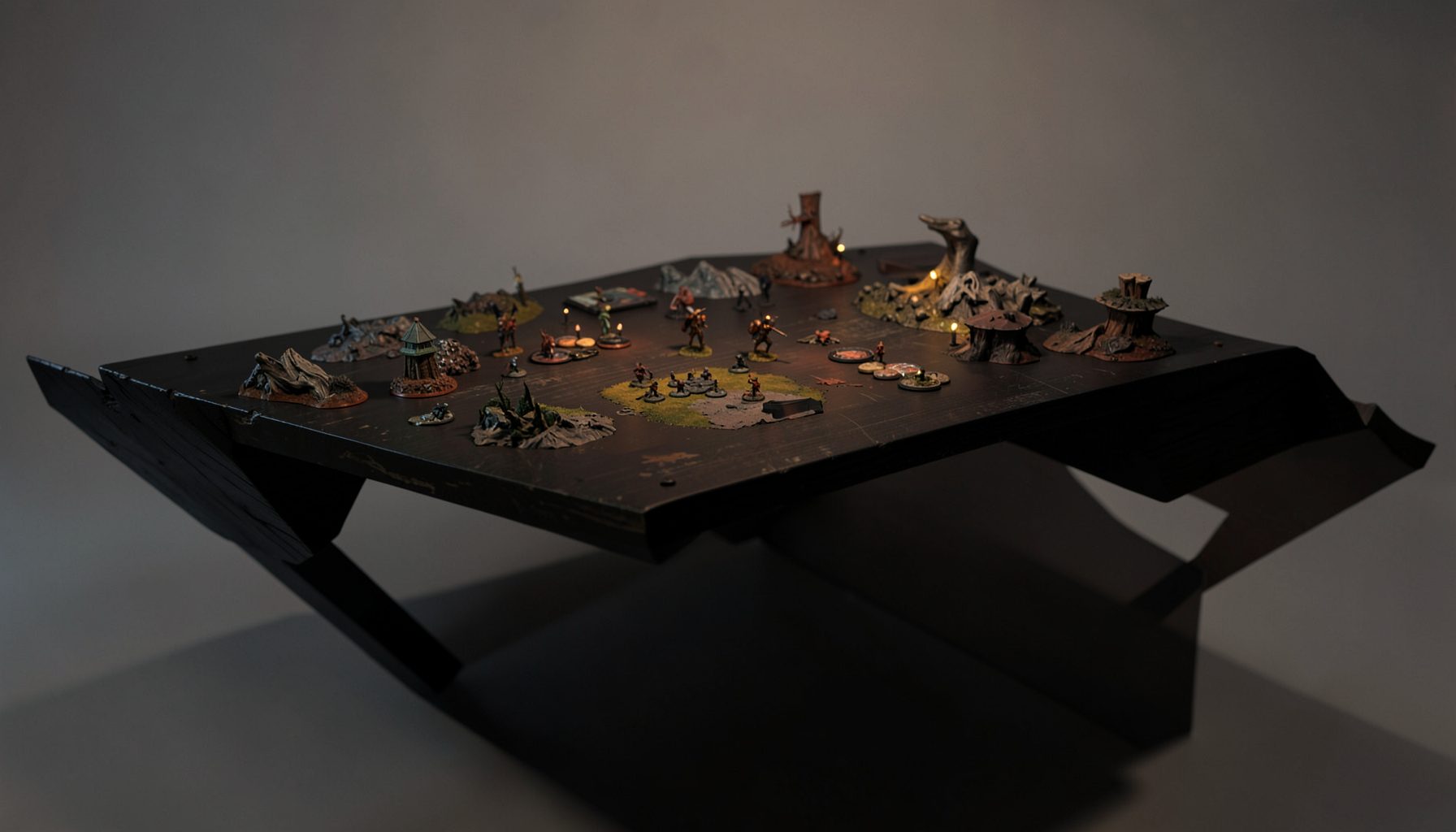
Live-streamed games, recorded matches, and event data gathered in one place.
Kill Team Stream hosts quality live streaming of Kill Team content — tournaments throughout the year on Twitch, regular games streamed to the channel, and tournament data gathered so players can see what's happening in the scene. Powered by WARHAMMER.
Browse tournamentsOfferings
Tournaments
Multiple Kill Team tournaments hosted throughout the year, all live-streamed on our Twitch channel.
Videos
Streams are recorded and uploaded to YouTube alongside original video content we produce.
Event Data
Tournament packets from past events plus resources for upcoming Kill Team tournaments.
Site Directory
Building a Kill Team for a Team Tournament
A team tournament changes the way you prepare for Kill Team. Instead of taking a single roster into a series of independent pairings, you are contributing one specialist force to a wider plan. Your result matters, but so does the matchup you create for teammates, the information you reveal during pairings, and the pressure you place on the opposing captain.
This format rewards deliberate list construction. A powerful operative may be less valuable than a reliable mission player, while a team with unusual deployment tools can force opponents into awkward decisions. The best squad is rarely the one with the highest damage ceiling in isolation. It is the force that performs a clear job within a five-player or multi-player tournament structure.
Australian events give this approach plenty of room to develop. Local tournaments in Melbourne, Sydney, Brisbane, Adelaide and Perth often bring together different regional metas, with players travelling significant distances for major weekends. Travel time, accommodation costs and limited practice opportunities make efficient preparation especially important. A team that arrives with defined responsibilities gains an advantage before the first pairing is announced.
Competitive preparation should therefore combine rules knowledge, roster discipline and communication. Streaming tournament games, studying recorded rounds and reviewing event results can reveal which archetypes are thriving in the current season. The goal is to build a coordinated group of teams whose strengths overlap where necessary, while their weaknesses do not all appear in the same matchup.
Start With The Team’s Strategic Identity
Before choosing operatives, decide what the tournament team is trying to achieve. Some groups prefer a balanced spread that aims for favourable or even pairings across the board. Others build around a strong anchor faction, using the remaining teams to absorb difficult matchups and create opportunities elsewhere. Neither approach is automatically correct, but every player needs to understand the shared plan.
A balanced team might include a durable elite kill team, a flexible mid-board force, a high-model-count objective team, a shooting specialist and a faction with unusual infiltration or countercharge tools. This gives the captain several pairing routes. A more aggressive team may instead rely on forcing bad choices: present one frightening matchup, protect a fragile scoring team, and use a specialist force to attack an opponent’s likely weak point.
Team identity should also reflect the event packet. Tac Ops, terrain density, turning point structure and mission selection can change the value of particular roles. A force that excels at open firing lanes may struggle on a dense urban board, while a melee team can lose much of its advantage when objectives are spread widely. Read the packet together and agree on what “good performance” means before models are assigned.
This conversation prevents individual list-building from becoming disconnected. A player who loves a high-risk glass cannon may need to accept a steadier build if the team already contains several volatile options. Likewise, a dependable objective specialist may be more useful than another flashy damage dealer when the overall roster lacks scoring consistency.
Define Roles Beyond Damage Output
The clearest role is the damage dealer, but a team tournament needs several other functions. A board-control team restricts movement, contests central objectives and makes the opponent spend actions inefficiently. A scoring team focuses on primary and secondary objectives with dependable activations. A denial team interferes with enemy plans through concealed movement, counteractions, debuffs or threat projection.
There are also matchup roles. An anti-elite force is valuable when opponents are likely to bring low-model-count teams with expensive operatives. A horde-clearance force can punish teams that rely on bodies and activation volume. Some kill teams are especially useful against shooting armies because they can hide, infiltrate or manipulate line of sight. Identifying these jobs helps the captain decide where each player should be offered.
Within the kill team itself, assign internal roles as well. A leader may provide command abilities but should not automatically be treated as the best operative for every mission. A gunner can control a lane, a forward operative can threaten an objective, and a utility model can open doors, provide support or carry a mission action. Every operative should have a purpose that remains useful when the preferred attack plan fails.
This is where synergy becomes practical. A model that grants rerolls, improves accuracy or enables movement is valuable because another operative converts that support into points or casualties. A melee threat may be strongest when a concealed scoring piece forces the enemy to approach. Rather than asking which model is individually strongest, assess how each rule affects the rest of the activation sequence.
Build A Pairing Matrix
A pairing matrix turns general ideas into a usable tournament tool. List the likely enemy archetypes down one side and your available teams across the other. Mark each matchup as favourable, playable, difficult or unacceptable, then add notes explaining why. The purpose is not to predict every result. It is to show where the roster has coverage and where the captain may need to sacrifice a player.
Use real evidence when assigning those ratings. Test games against common local factions, review recent tournament standings and examine streamed rounds for deployment patterns. Community results from Sydney or Melbourne may differ from experiences at a smaller regional event because terrain collections, player pools and mission preferences can vary. Your matrix should describe the environment you are actually likely to face, not an abstract global meta.
The matrix also identifies duplicated weaknesses. If three teams struggle against fast melee forces, the problem is structural. If every player depends on open firing lanes, dense terrain becomes a team-wide liability. A force with modest individual power but broad matchup coverage can be more valuable than several specialists that all collapse against the same counter.
Pairings are also influenced by player comfort. A theoretically favourable matchup is not useful if its pilot has never practised the relevant mission. Record which player understands each matchup, which pairings require a particular board layout, and which teams are comfortable playing from behind. This makes the matrix a decision aid rather than a simple collection of win-rate guesses.
Balance Threats And Reliability
A team tournament rewards consistency because every round can affect the wider score. High-variance strategies have their place, especially when a difficult pairing needs to be attacked aggressively, but they should be used intentionally. A force that relies on a single early charge or a perfect dice sequence may produce spectacular wins while leaving the team exposed when the plan fails.
Reliability comes from several sources: multiple scoring routes, useful operatives after taking damage, dependable movement, and tactics that remain relevant across different boards. Redundancy matters as well. If a key mission action can be performed only by one model, losing that operative may end the game plan. If two or three models can contribute to the same task, the list is more resilient.
Resource management deserves attention. Command points, equipment, once-per-game abilities and activation order should be mapped during practice. A strong alpha strike may compete with defensive tools for the same resource. A team that spends everything in turning point one can be easy to punish later, particularly in missions where late scoring determines the result.
Australian tournament conditions can make reliability even more important. A player travelling from Perth to an event in Brisbane may have fewer chances to practise against the local field, while long event days can make complex, high-maintenance plans harder to execute. Simple decision trees, clearly marked tokens and a rehearsed opening turn reduce cognitive load when fatigue sets in.
Practise Communication And Deployment
The strongest team can underperform if its players communicate poorly. Before pairings, agree on what information the captain needs: opponent faction, board type, mission, player experience, and whether the matchup has been tested. Players should report honestly rather than volunteering for a difficult pairing simply because they want to appear confident. Accurate information creates better decisions.
Deployment plans should be shared in broad terms. A player does not need to reveal every tactic, but the team should know whether a force wants to defend, pressure a flank, contest the centre or delay engagement. This makes it easier to predict the likely result of each pairing and decide which table deserves the most attention from the captain or coach.
During games, communication must respect event rules and sportsmanship. In many Australian communities, the social atmosphere is a major part of the tournament experience, from club-run events to large conventions and interstate gatherings. Keep strategic support within the permissions of the format, avoid distracting a teammate during a critical activation, and treat opponents with the same clarity and respect expected at the club table.
Practise the full process, not just individual games. Run mock pairing phases, set a time limit for decisions, and rotate who acts as captain. After each simulated round, discuss whether the chosen pairings reflected the intended strategy. Photos from an event can also help the team review deployment habits and board interaction later; a shared event photo archive may reveal positioning details that were easy to miss during a live round.
Review Results And Refine The Roster
After the tournament, separate list problems from execution problems. A loss does not automatically mean the roster was wrong. Review the mission, deployment, first turning point, resource use and scoring decisions before changing models. Sometimes the correct adjustment is a different opening plan or a clearer role assignment.
Look for patterns across the whole team. Did the roster concede too many points because it lacked durable objective pieces? Were players forced into bad pairings because one faction had no acceptable opponent? Did several games become difficult after a single specialist was removed? These observations are more useful than focusing only on final win-loss records.
Keep a record of terrain, mission packs and opposing archetypes. Australian events can vary considerably between a local club tournament, a major convention weekend and an interstate championship. Costs and availability also matter in the local market: imported kits, upgrade sprues and specialist accessories may take time to arrive, while second-hand groups and regional club networks can provide practical alternatives.
Models should be chosen with future flexibility in mind when possible. Magnetised options, interchangeable equipment and a roster that supports several legal configurations can reduce the cost of adapting to balance changes. Still, flexibility should not replace a clear game plan. A smaller collection with well-practised roles will usually outperform a larger case of untested alternatives.
The final review should produce a short team briefing for the next event. Record the best pairings, the dangerous counters, the missions that exposed weaknesses and the operatives that consistently delivered value. Over time, this becomes a living playbook shaped by actual games, local opponents and shared experience. That process turns separate players into a coordinated tournament unit.
Tournament Packets
Packets from previous Kill Team events are kept here alongside new packets for upcoming tournaments, so organizers and players have what they need in one place.
View Event Data