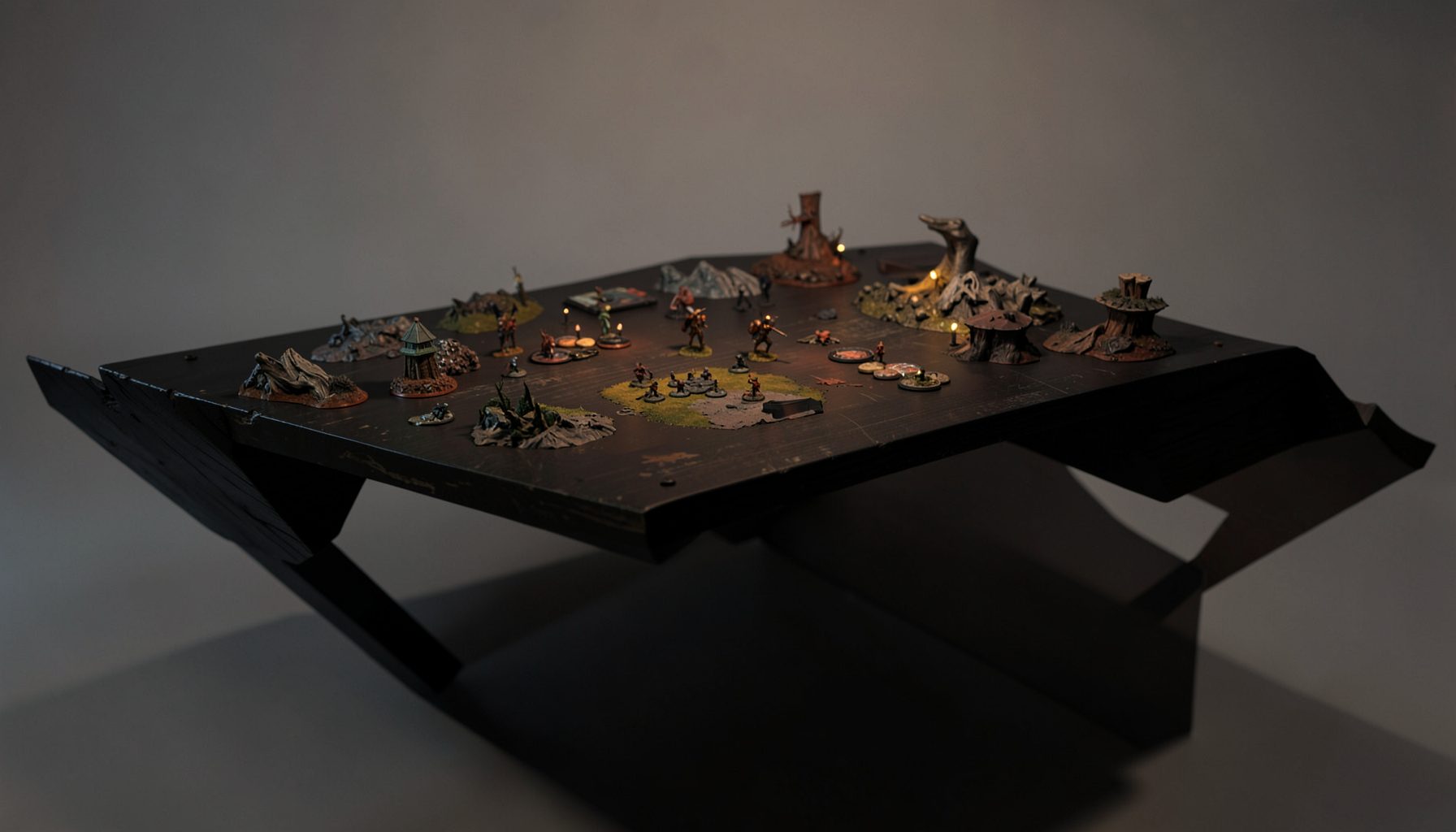
Live-streamed games, recorded matches, and event data gathered in one place.
Kill Team Stream hosts quality live streaming of Kill Team content — tournaments throughout the year on Twitch, regular games streamed to the channel, and tournament data gathered so players can see what's happening in the scene. Powered by WARHAMMER.
Browse tournamentsOfferings
Tournaments
Multiple Kill Team tournaments hosted throughout the year, all live-streamed on our Twitch channel.
Videos
Streams are recorded and uploaded to YouTube alongside original video content we produce.
Event Data
Tournament packets from past events plus resources for upcoming Kill Team tournaments.
Site Directory
Building a Kill Team roster that holds up against every opponent
The best Kill Team rosters are not the ones that win every fight on the tabletop. They survive the surprises an opponent throws at you: the awkward mission, the unfamiliar terrain, the list archetype that punishes a predictable plan. A flexible roster absorbs pressure and answers back, and that is the kind of list worth taking to a tournament anywhere the Australian circuit runs hot.
Players who try to cover every base end up with a list that does nothing well. Start with one strong idea and build outwards, layering redundancy to handle bad matchups. That balance between focus and breadth separates a mid-pack list from one that reaches the top tables at venues like Good Games Parramatta or Milspec Hobbies in Melbourne.
Australia's tournament community leans on a handful of well-organised events each year, so each list you bring gets a real workout. Players travel from Perth, Adelaide and Hobart to chase ranking points, and the field is rarely predictable. Handling every opponent is less about predicting the meta and more about giving yourself tools to solve problems on the day.
The approach below blends faction philosophy, fireteam construction, mission awareness and Australian-specific tournament prep. Each section stands alone, but together they form a single philosophy: build a list you do not need to rebuild every time the meta shifts.
Pin down a faction identity before anything else
Every competitive roster starts with a faction choice that fits the way you actually play. If you love aggressive pushes and dice-heavy combat, a melee faction like Wyrmblade feels natural. If you prefer positional play and objective denial, something like Pathfinders or Veteran Guardsmen gives you the tools to control the board. The faction matters less than the clarity of the role you want it to play.
Australian players often gravitate toward factions with strong model ranges at local retailers, since Games Workshop availability can lag global releases and interstate shipping adds cost. Factions with broad bits boxes, like Space Marines or Astra Militarum, are easier to kitbash at casual games in Canberra or Adelaide. Pick the faction that excites you, because enthusiasm shows in tight games when your list is under pressure.
Once the faction is locked, write down two or three sentences describing how you want it to win a game. Keep those visible during list building. Every operative, weapon and piece of equipment should reinforce that vision. If a choice does not pull its weight, cut it.
Read the mission pack and terrain layout before you lock the list
The mission packet and map selection tell you more about your tournament than faction matchups ever will. Most Australian events publish their packet at least three weeks ahead, hosted on Best Coast Pairing or a tournament Discord. Read it twice: once for the missions and once for deployment zones, objective placement and terrain rules. A roster that scores well on Capture and Control will not necessarily do the same on Sweep and Clear.
Terrain matters just as much. Australian tournaments, particularly those at larger halls during conventions like SMG in Sydney or CanCon in Canberra, tend to use dense line-of-sight blocking layouts. Lists that rely on long-range shooting often struggle in those environments, while lists built around short-ranged trades and melee threats tend to thrive. Check photos from previous years' events to get a feel for the board.
Keep a small spreadsheet of the missions and note which of your operatives score well on each. If your roster only has two or three operatives that can hold objectives on Open Play missions, the rest of the list needs to either support them or score in alternative ways. Roster flexibility begins long before you roll your first dice.
Build fireteams with overlapping roles
Fireteam composition is where most rosters win or lose. A balanced fireteam has a shooter, a melee threat, a controller and an objective holder, with at least one operative capable of stepping into another role if the original is wounded or focused. Specialism matters too: a Comms specialist who can give an order to a Trooper two zones away is more valuable than a fourth identical rifleman sitting in the back line.
| Fireteam archetype | Strength | Weakness | Best against |
|---|---|---|---|
| Aggressive melee | High damage output, board control | Vulnerable to chokepoint denial | Faction teams, horde lists |
| Static gunline | Strong area denial, objective camping | Slow to adapt, weak flanks | Melee rush, mission denial |
| Balanced skirmish | Flexible trades, reliable scoring | Spread thin in extended fights | Most matchups, mission packs |
| Disruption-heavy | Stuns opponents, slows turns | Relies on specialist dice | Elite teams, high-value targets |
The table above gives a rough map of the main archetypes you can build towards. Most Australian tournament-winning lists lean on the balanced skirmish style because it absorbs surprises. If you want a more aggressive identity, build redundancy into your melee threats so a single bad combat round does not end your game.
Practise with each operative on the board at least once before a tournament. At Melbourne's regular Milspec Hobbies events, players often share demo games of their operative roster, and that hands-on time surfaces the awkward gaps in a list. If you find an operative you never want to deploy, swap them out before the event.
Diversify equipment and tactical operative picks
Equipment points disappear quickly, and most players either spend them too cautiously or blow them all on one or two flashy pieces. A flexible roster spreads points across multiple operatives so losing one does not cripple the whole team. A Grappling Hook on your Trooper and a Combat Blade upgrade on your leader can be more valuable together than a single rare piece on one model.
Tac Ops selection is the other major decision. Australian tournament packet design tends to favour a mix of faction-specific and universal ops, and choosing three that reinforce your faction identity usually pays off. If your roster is built around objective play, prioritise ops that reward holding territory over those that reward killing.
Spend a session before each event simulating losing your first or second operative on turn one. The list that recovers gracefully handles opponents who bring good alpha-strike lists. If your only source of damage output is one model and they die early, the rest of the list is just walking practice for your opponent's shooting.
Practise against the widest possible faction spread
Local metas vary, but the Australian scene is broad enough that almost any faction can show up at a major. Players at Good Games stores across Brisbane and Sydney regularly field everything from Tyranids to Navy Breachers, and Perth's smaller but growing scene has a fondness for Eldar and elite teams. If you only practise against two or three factions, you will meet your blind spots on tournament day.
Try to set up at least one practice game per week against a faction you have struggled against historically. Online matchmaking through tools like the official Kill Team app pairs you with random opponents, useful for breadth but not always for depth. In-person sessions at local hobby stores give you better information about positioning, terrain interaction and how dice behave under tournament pressure.
Keep a notes file after every practice game. Write down what hurt you, what worked, and which operatives you used most. Patterns emerge quickly, and one small change to a loadout or a deployment habit often solves multiple problems at once. Tournament prep is mostly accumulated marginal gains.
Build in-match adaptability into how you pilot the list
A flexible roster still needs a flexible player. The biggest edge at Australian events, especially the multi-day majors, is the ability to read the opponent's plan in the first turning point and pivot your own. Watch how they deploy, where they place their specialists, and which objectives they move towards first. That information is usually enough to confirm their faction's strengths and predict their second turn push.
Have a fallback plan for every mission. If your primary scoring plan relies on holding the centre, you also need a plan for when you are pushed back into your own deployment zone. Rehearse those fallback plans during practice games so they are not new ideas under pressure. A pilot who has already played the worst-case scenario tends to stay calm and find the small wins.
Time management matters more in Australia than in many regions, since event schedules run tightly to allow for longer rounds. Burning five minutes on a single decision early in the game can leave you scrambling for activation order later. Practise making fast calls on sub-optimal choices, then trust them. The roster is only as adaptable as the player holding the datacards.
Plan your prep around the Australian tournament calendar
Australian tournament prep has a few quirks worth planning around. Major events tend to cluster around the cooler months, and summer events in December or January sometimes hit venues that are not climate-controlled. Bring water, dice that read well in bright light, and a small towel if you are travelling to Brisbane or Perth during a hot spell.
Travel between state capitals is long, and flights from Hobart or Adelaide for a Sydney major eat into your prep time. Build your roster and run practice games two to three weeks ahead of travel so any list changes can be tested before you pack. Australia's consumer law gives you solid guarantees on faulty products, but a cracked blister at the airport is harder to fix than one at home.
Finally, think about your streaming and content schedule. The Kill Team Stream audience tunes in at Australian Eastern time, so live commentary and recorded matches that align with AEST evenings reach the largest local crowd. Promoting your roster reveals, practice sessions and tournament runs at AEST-friendly slots builds momentum heading into event weekends. The roster itself might win games, but the community prep is what keeps the scene alive between events.
Tournament Packets
Packets from previous Kill Team events are kept here alongside new packets for upcoming tournaments, so organizers and players have what they need in one place.
View Event Data