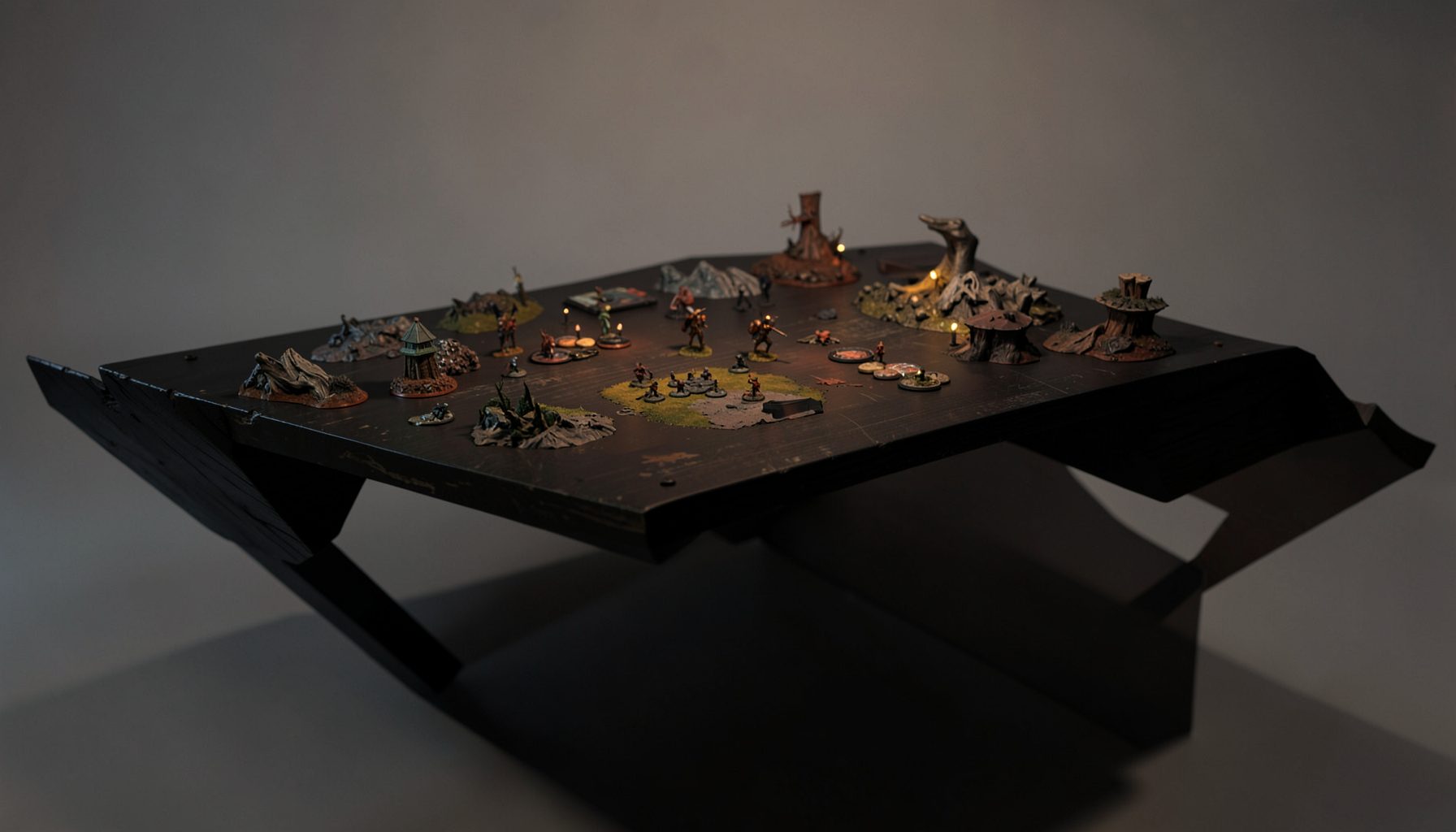
Live-streamed games, recorded matches, and event data gathered in one place.
Kill Team Stream hosts quality live streaming of Kill Team content — tournaments throughout the year on Twitch, regular games streamed to the channel, and tournament data gathered so players can see what's happening in the scene. Powered by WARHAMMER.
Browse tournamentsOfferings
Tournaments
Multiple Kill Team tournaments hosted throughout the year, all live-streamed on our Twitch channel.
Videos
Streams are recorded and uploaded to YouTube alongside original video content we produce.
Event Data
Tournament packets from past events plus resources for upcoming Kill Team tournaments.
Site Directory
Building a Kill Team Roster That Welcomes Every Play Style
A Kill Team roster is more than a collection of miniatures pulled from a faction box. It is a toolkit that has to survive every matchup your opponent throws at you, every mission the tournament packet offers, and every mood your mate brings to the tabletop on game night. Players approach the game with wildly different instincts. Some like to shove a heavy gun up the board and trade shots from turn one. Others prefer to lurk behind cover, score quietly, and punish anyone who steps into the open. A roster that only rewards one of those instincts will leave half your regular opponents feeling locked out of the game they came to play.
This piece is for organisers running local events, for newcomers staring at a faction list wondering where their personality fits, and for veterans tired of playing the same ten operatives every tournament. We will walk through how to shape a roster that bends rather than breaks, using the kill team roster as a flexible foundation rather than a fixed answer sheet.
The Australian tabletop scene has always punched above its weight for a country spread across a continent. From the packed halls of CanCon in Canberra to weekend meetups at Games Workshop stores in Chatswood and Brisbane, players here are used to adapting their lists on the fly, often because the mate they face next has travelled a long way and nobody wants to waste the arvo on a stinker of a game.
| Play Style | What It Looks Like at the Table | Roster Sigillations to Prioritise |
|---|---|---|
| Aggressive | Charging forward, controlling mid-board, applying pressure from turn one | Fast melee operatives, plasma and melta specialists, leaders with fight-first abilities |
| Objective-focused | Slow advance, planting on points, playing the primary | Stikier, conceal-able, sticky objective specialists, silent gunners |
| Defensive | Holding terrain, screening, counter-punching once the enemy commits | Heavy weapon teams, mine/ trap deployables, guardians, operatives with bodyguard |
| Balanced/ Adaptive | Reading the matchup, swapping tactics mid-game | A mix of ploys that reward either play style, faction abilities covering both phases |
Defining Player Styles in Kill Team Before You Build
Before picking operatives, it helps to name the play styles you want your roster to serve. Most Kill Team players fall somewhere on a spectrum between three poles. The first is aggression: charging into the enemy, controlling the centre, and forcing reactive play. The third is operational craft, scoring more by leaving the enemy at the centre, and forcing ops from anywhere. The second is objective play, the workhorse style of moving methodically, holding territory, and turning primaries into secondaries.
A roster that tries to do everything at once usually does nothing well. Instead, think of your roster as a palette of options. Pick a faction whose ploys and faction rules lean into at least two of those poles, so any player at the table can find a way to play that suits their temperament. For example, a Kommando roster naturally supports aggression through Dirty Tricks, but also includes sneaky Dads and worse sniper archetypes that let a more cautious player lurk on vantage points and pick off targets from across the board.
When you know your styles, you can audit your roster by asking three questions. Does it give an aggressive player something to charge with? Does it give a defensive player something to hide behind? Does it give an objective player something to score with? If any answer is no, you have just identified the operative you need to add or swap next.
Choosing a Faction with Built-In Variety
Some factions arrive at the table with their play style baked in. Deathwatch leans elite and aggressive. Pathfinders are synonymous with objective denial. Other factions arrive as blank slates that you can bend in many directions, and those are the ones worth considering when you want a roster to accommodate multiple player styles.
Phobos Strike Teams, Veteran Orkios, and Veteran Guard teams all offer toolkits that can be tuned toward either polarity of the game. Intercession Squads give you tough access to melee so a brawler feels at home, while also offering heavy intercessors and a leader that anchors a mid-board castle for a defensive player. Orks, similarly, can be built around choppy, brood, and choppy warriors or stretched toward objective tanking through Kommandos or Blood Axes with sneaky Boys in the mix.
The trick is to choose a faction whose ploy set rewards two opposing approaches. If both your faction and your chosen kill team specialty lean hard into melee, you will struggle to accommodate someone who wants to hang back and shoot. Read all faction abilities on the datasheet, then read all faction ploys from the deck. A faction whose ploys let you either push forward or pull back, depending on the turn, gives you the kind of asymmetric identity that season kits can flex around.
The Core, Flex, and Filler Framework
Once you have a faction in mind, think of your roster in three layers. The core layer is the operatives who define your battle plan, usually three to five models your list is built around. The flex layer is the operatives who adapt to the matchup, usually two to three models that swap in or out depending on faction or mission. The filler layer is the last one or two picks, the ones you add because you need a bodyguard, a comms piece, or simply a weapon profile nobody else in your roster covers.
Take a Veteran Guard roster as an example. The core might be a tempestor with command rod, two plasma gunners, and a sniper. The flex layer might include a flamer for close-range pressure, a med-pack operative for objective holding, and a demo with melta for popping tanks. The filler could be a comms trooper whose only job is to pass orders around the board. Each operative earns its slot by doing something the others cannot.
When you build with this structure, swaps for your opponent players become obvious. If your mate is having a crack at a melee-heavy list, you take the melta and the flamer. If your mate is a defensive player playing White Dwarf-style castle lists, you bring the sniper and the demo engineers and bring them down to range. The roster stops being a fixed answer and starts behaving like a toolbelt.
Balancing Operative Roles Across the Roster
Kill Team is built around the contrast between specialists and troopers. Some limits feel like they were designed to reward certain weapons, certain positioning, and certain support pieces. A roster that accommodates many players, including the casual mate who turns up once a month, needs enough role coverage that nobody feels redundant.
A good rule of thumb is to ensure your roster contains at least one of each archetype. A melee threat, a ranged threat, an objective holder, a support piece, and a leader. If any of those is missing, a player whose strength lies in that archetype will feel awkward on your roster. If you have two melee threats and no ranged support, a shooter at the table will have no objective one to support them.
Balance the kill team fire teams carefully. Most kill teams run two fire teams, and each fire team is governed by the same faction-specific dataslate. If your roster's two fire teams are wildly different in capability, your casual players will struggle to pilot one of them. Try to make both fire teams feel useful, so any player can play either half of the roster and feel they are contributing.
Tuning the Roster for Australian Tournament Realities
Australian tournament play has its own rhythms, and a roster built only for sparring in the back shed can fall apart under these rhythms. State distances are massive. Travelling from Perth to Brisbane for a major event means committing to a roster before you even know what the meta in the eastern states looks like. Pack your roster with flexible operatives so a regional meta looks like one guy's mood.
Local conditions also shape what works on the table. Many Australian venues run warm, sometimes sticky, and lighting can be uneven across packed halls. A roster that relies on reading small icons at long range can suffer in those conditions, while a roster that relies on close-range trades and a charged close range survives them. Think about whether your roster needs long-range tricks or whether it should rely on a kit that works at arm's length.
The cost-of-living reality matters too. A 20-operative roster built around three specialist boxes can break a wallet when you add postage from the local distributor. Pick a kill team whose operatives are available in two or three boxes, so you are not paying for cross-bred postage every time you want a single model. Players in Melbourne and Sydney will recognise this from their regular haunts at Good Games and Milsims, where stock varies week to week, and a roster that relies on one rare cross-tied bit is a roster that risks being incomplete on the day.
Adapting the Roster to Mission Packs and Opponents
A flexible roster is only as useful as the player's willingness to swap operatives before a game. Before each match, glance at the mission. If the primary is live and secrecy, bring objective holders. If the primary is live and direct fire, bring the more aggressive half of your roster. If the mission has turrets or other objectives, bring a roster that can reach them.
The same logic applies to opponents. If your mate is bringing a horde faction like Hormagaunts or Boyz, your roster needs horde control, so the flamer and the blast pistol come out of the case. If your mate is bringing a single big squad of Sigmarines, your roster needs anti-tank, so the melta and the demo engineers get the nod.
For keeping up with broader hobby news that might affect your choices between events, many players keep an eye on community updates and similar outlets to spot meta shifts before they hit the local scene.
Iterating the Roster Through Real Play
Finally, a roster is only as good as the play that shaped it. After every event, or every few games at the local store, note which operators answered your hardest matchups and which ones sat in the case the whole arvo. That paper trail is more valuable than any theory you read online. The roster that won your mate's local RTT a charity game will not necessarily win the next one, and that tune will not necessarily win the one after.
Plan a roster review every six weeks. Drop the operator with the lowest return, replace them with the operator who most often solves your worst matchups, and re-balance the fire teams so neither side feels like a liability. Over a season, you will find the roster settles into a shape that suits the players who actually use it, not the players who would, in theory, use it. That difference is what makes a roster feel like home rather than a homework assignment.
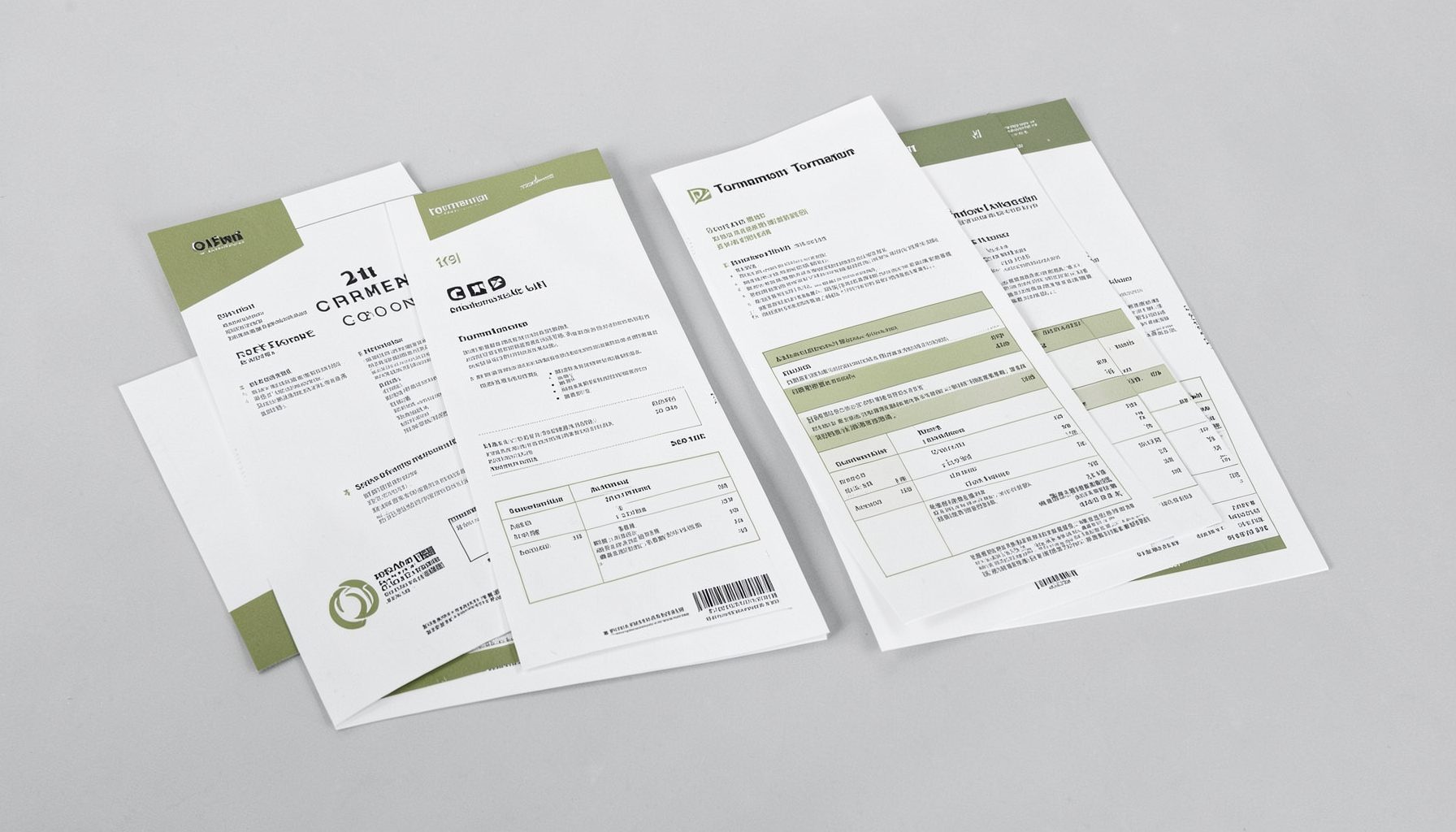
Tournament Packets
Packets from previous Kill Team events are kept here alongside new packets for upcoming tournaments, so organizers and players have what they need in one place.
View Event Data