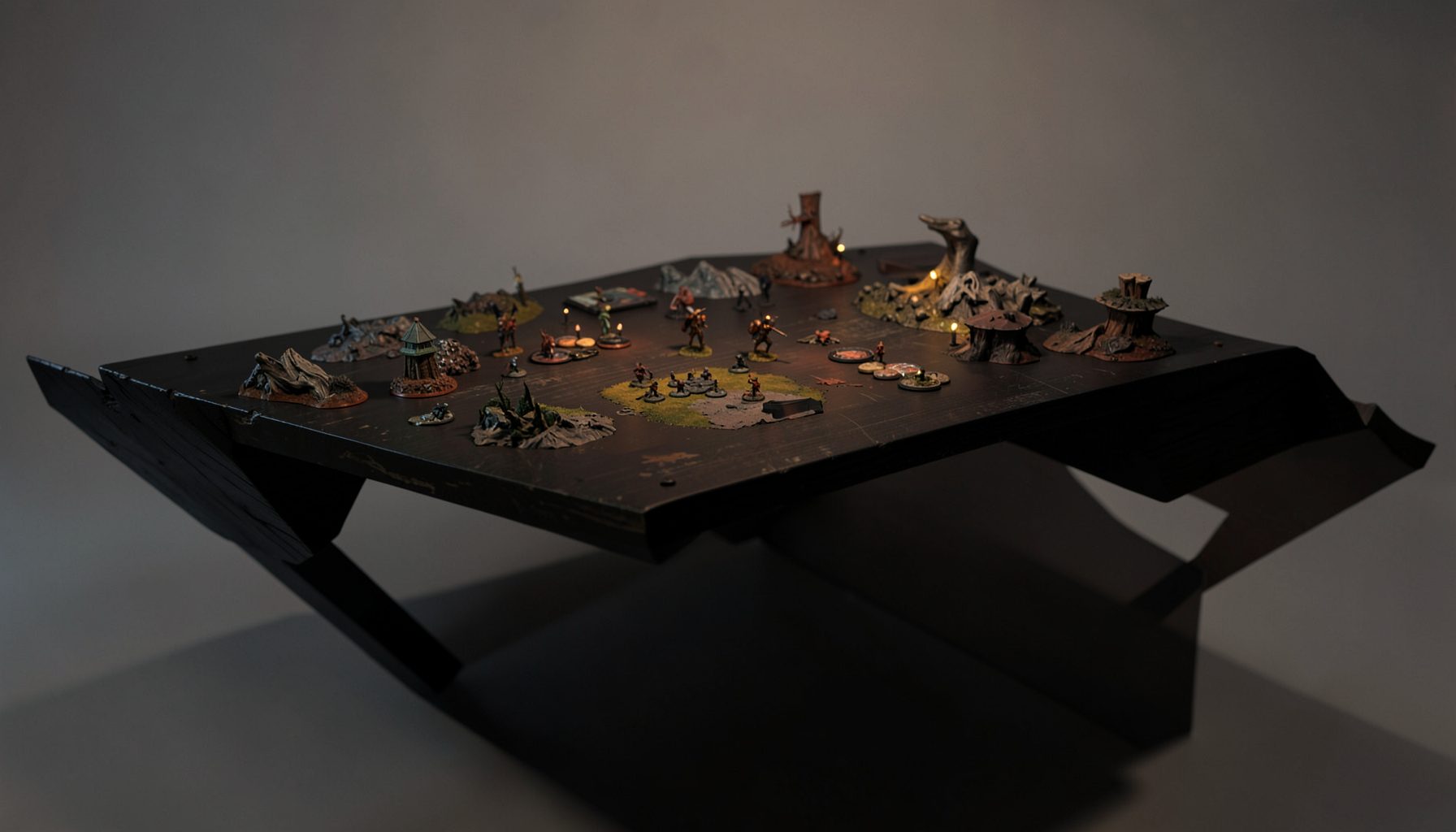
Live-streamed games, recorded matches, and event data gathered in one place.
Kill Team Stream hosts quality live streaming of Kill Team content — tournaments throughout the year on Twitch, regular games streamed to the channel, and tournament data gathered so players can see what's happening in the scene. Powered by WARHAMMER.
Browse tournamentsOfferings
Tournaments
Multiple Kill Team tournaments hosted throughout the year, all live-streamed on our Twitch channel.
Videos
Streams are recorded and uploaded to YouTube alongside original video content we produce.
Event Data
Tournament packets from past events plus resources for upcoming Kill Team tournaments.
Site Directory
Building a kill team for open board mission success
When you sit down for an Open Board match, the centre of the table becomes the whole battlefield. Three objectives spread across the middle, each one a hotly contested square inch of terrain, and the team that controls them usually controls the scorecard. In Australia, this mission shows up again and again at events like CanCon in Canberra and the Brisbane Cup, where locals know that an open board can be a tiebreaker or a round-three decider.
Kill Team Stream covers these tournaments week in and week out, and one pattern keeps repeating: the teams that dominate open boards share a handful of traits. They move with purpose, trade blows efficiently, and accept that staying still means losing the objective. If you are building a roster from the ground up, the mission should shape almost every choice you make.
This walkthrough covers how to pick a faction, draft a roster, and play the mission so you can win open boards rather than just survive them. We will look at reading the deployment, picking operatives with the right toolkit, and the small tactical habits that turn a decent team into a dominating one. Whether you are tuning up for your local comp at Milsims in Melbourne or aiming at Swordfest down in Tasmania, these are the building blocks.
Reading the open board mission before you draft
Open Board missions reward mobility and punish over-extension in equal measure. The centre is a killbox, and a player who rushes in without a plan will lose operatives faster than they score points. The first thing to consider is how the mission scores: typically a mix of primary objectives in the middle and secondary objectives that reward holding more operatives in a quadrant or simply surviving the round.
Aussie players tend to be pragmatic about this. At a club night in Perth or a Saturday arvo session at Guardlings in Brisbane, you will hear talk of board control the way surfers talk about sets. Reading the deployment map means looking at line-of-sight blockers, areas where your operatives can hide while still contesting the centre, and the likely path your opponent will take to reach the middle.
Take a moment before the game to count the angles. An open board is usually light on obscuring terrain in the centre, so a model with a long-range weapon and a cover save can do serious work. Faction abilities that grant stealth, conceal, or movement tricks tend to outshine raw killing power on this mission, because every operative you keep alive is one who can hold an objective.
Choosing a faction and operative toolkit
The factions that thrive on open boards share a common philosophy: they either control the centre early, or they punish anyone who tries to. Phobos Space Marines are a classic example, with their bolt carbines and the operative that can drop in from reserve. Their shooting is reliable, and their ploys often give them a free dash after shooting, which is exactly the kind of edge you need when fighting over three objectives.
Other strong picks include Wyrmblade teams, who excel at board control with their tree-walking and ignore-terrain tricks, and the Kasrkin, whose hot-shot lasguns can reach across the table with brutal accuracy. Tau Hunter Cadres are also popular in Australian metas, because their drones can sit on objectives while the battlesuits do the fighting. None of these are auto-wins, but they all share a thematic strength: flexibility.
What you want, more than anything, is a roster with at least one operative who is fast, one who is tough, and one who can threaten the enemy at range. The fast operative gets to objectives first; the tough operative holds them when things get rough; the ranged threat punishes opponents who try to push you off. If you find yourself building a roster where every model is slow and melee-focused, you will struggle on open boards no matter how good your painter is.
Composing a roster that controls the centre
Once you have your faction, the real work begins. Roster building is where most open board losses are decided, because players often optimise for killing power and forget about objective play. Start by asking what each operative does on the board. A heavy gunner is great at deleting threats, but if they cannot reach the centre without being shot off the table, they are a liability.
The Australian competitive scene has produced some sharp roster choices over the past year, and one trend is the inclusion of a dedicated objective holder. This is often a cheap operative with a good save, decent movement, and ideally a special rule that makes them hard to shift. Phobos infiltrators, Kasrkin troopers, and certain cult operatives fit this role nicely, and they free up your heavy hitters to focus on killing.
Secondaries matter too. In a three-objective mission, you want ploys and equipment that reward you for being in the centre. Ignored line of sight through a window, conceal orders that let you dart in and out, and equipment like photo goggles or a tac-rail can all be the difference between a tense round and a lost one. The Grand Tournament finals tips breakdown on Kill Team Stream highlights several roster choices that rewarded exactly this kind of patient play.
Deployment and movement that wins the centre
Deployment is where open board games are often decided before a single die is rolled. Spread your operatives too thin and you lose the centre to a fast opponent. Stack them too close and a single plasma overwatch will wipe half your team. The sweet spot is usually a loose crescent that lets you reach the centre on turn one without exposing your backfield to a long-ranged counter.
Movement is the heart of open board play. Treat your dash action as your most valuable resource, not your shoot action. An operative who moves into the centre, holds the objective with a conceal order, and survives to score is worth three who shoot the enemy team but die doing it. Aussie TOs have a saying that you cannot shoot what you cannot reach, which is a nice reminder that positioning beats firepower on these missions.
Pay attention to your opponent's faction and what they can do on turn one. If they have a deep-strike trick, you need to keep a counter-punch ready. If they have a slow team, you can be more aggressive early and force them to react. The best open board players I have watched, including several who have taken titles at events like the Melbourne Invitational, all share a habit: they think two activation windows ahead, and they always have a plan B if their plan A fails.
Common mistakes and how to avoid them
The biggest mistake players make on open boards is treating the mission like a regular kill mission. They push up the middle, exchange fire, and lose the objective while they are doing it. The scorecard rewards presence, not kills, and a player with five operatives on objectives at the end of the round will beat a player with three dead enemies on the floor.
Another classic error is over-committing to one objective. Three objectives mean three threats, and a team that piles onto the centre forgets that the side objectives still score. A good rule of thumb is to split your forces: two operatives on the centre, one on each flank, and a reserve in case of trouble. This keeps your opponent guessing and makes it harder for them to clear you off the board.
Finally, do not ignore your faction's ploys on the turning point they matter most. Ploys like Fight for Honour, Tactical Insight, or whatever your faction equivalent is can swing a round when used at the right moment. A common habit in the Aussie scene is to save your best ploy for the moment you really need it, rather than burning it on the first good shot. If you want to see this in action, the recorded games from the recent Swordfest tournament show some masterful ploy timing, and they are well worth a study session with a cuppa.
Tournament Packets
Packets from previous Kill Team events are kept here alongside new packets for upcoming tournaments, so organizers and players have what they need in one place.
View Event Data