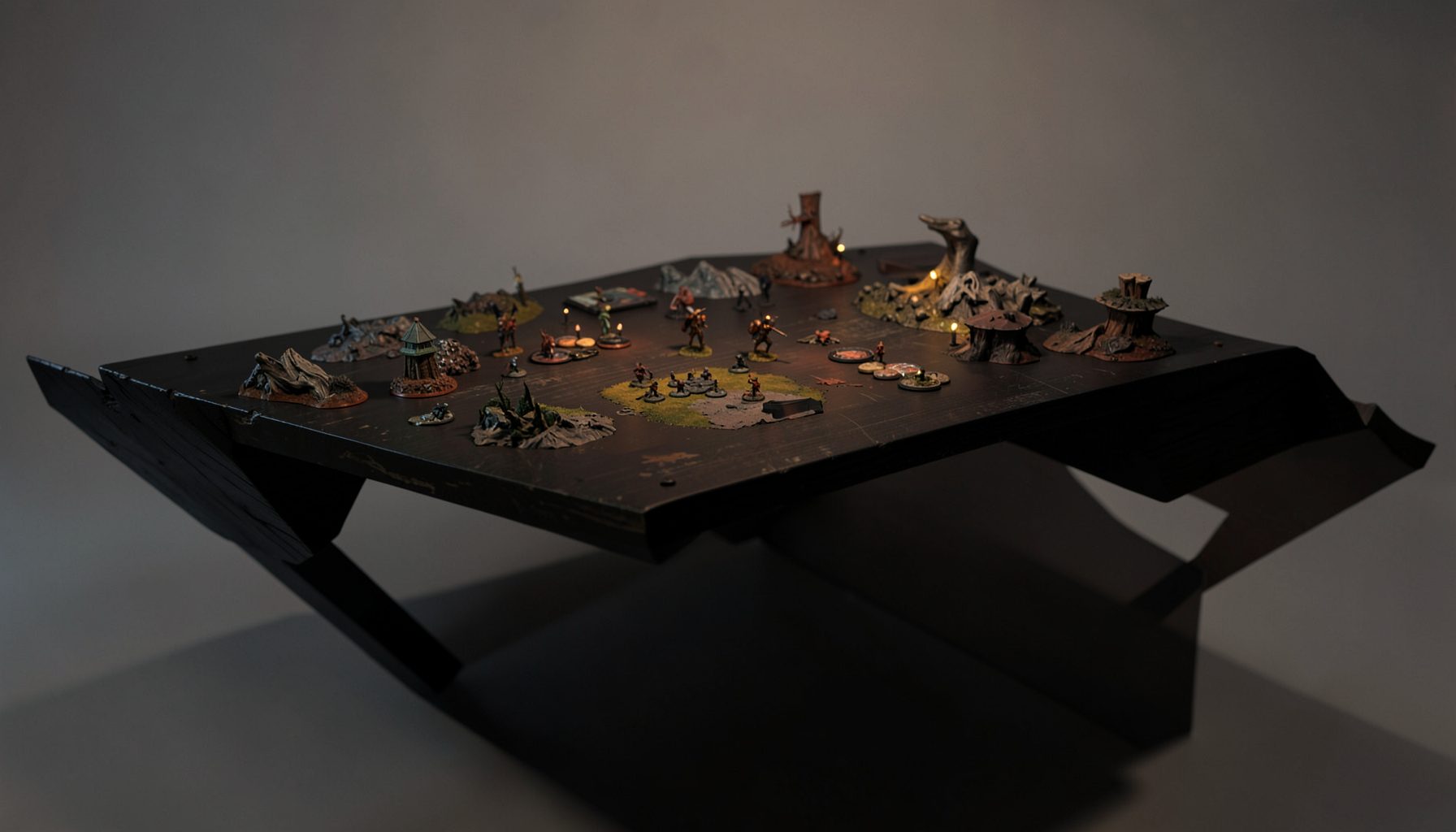
Live-streamed games, recorded matches, and event data gathered in one place.
Kill Team Stream hosts quality live streaming of Kill Team content — tournaments throughout the year on Twitch, regular games streamed to the channel, and tournament data gathered so players can see what's happening in the scene. Powered by WARHAMMER.
Browse tournamentsOfferings
Tournaments
Multiple Kill Team tournaments hosted throughout the year, all live-streamed on our Twitch channel.
Videos
Streams are recorded and uploaded to YouTube alongside original video content we produce.
Event Data
Tournament packets from past events plus resources for upcoming Kill Team tournaments.
Site Directory
Reading an Opponent’s Kill Team in the Opening Ten Minutes
The first ten minutes of a Kill Team match can reveal more than a quick glance at the roster. Before the opening shots are fired, you can identify how aggressively your opponent wants to play, which operatives are essential to their plan, and whether their scoring route depends on speed, board control, or a late activation surge. This information gives you a practical opponent profile rather than a vague impression of the faction.
Competitive matches are often decided by small early choices: which operative takes the first exposed position, whether a player spends a command point immediately, and how much of the team is committed to a flank. If you learn to read those signals systematically, your opening turns become calmer and more purposeful. The goal is not to memorise every faction matchup. It is to recognise the opponent’s win condition before it becomes difficult to stop.
Start With The Team’s Win Condition
Before deployment, study the team as a collection of jobs rather than individual data sheets. Ask which operatives score primary objectives, which ones create threats, and which ones make the rest of the team function. A leader may provide orders or command abilities, while a specialist may be the only model capable of opening a safe route through heavy cover. Removing either can change the entire shape of the game.
Look for the team’s preferred distance. A close-combat kill team usually needs access to staging points, concealment, and a route into the centre. A shooting-oriented force wants sightlines, protected firing positions, and enough activations to punish anyone who moves carelessly. A mission-focused team may appear less threatening because it is not seeking early kills, yet it can win by occupying safe objectives and forcing you to chase it.
Roster construction also reveals flexibility. Count the number of operatives with unusual movement, free dashes, forward deployment, or actions that ignore normal restrictions. These are often the models that make an apparently safe position dangerous. Mark them mentally before the game begins, even if they are currently hidden behind terrain.
Read Deployment And Early Movement
Deployment is a statement of intent. A dense cluster near one side of the board can indicate a coordinated push, but it can also be a feint designed to pull your team away from an objective. A spread-out deployment may suggest multiple scoring lanes, or it may expose the team to isolated fights. Compare the placement of the leader, the strongest weapon, and the fastest operative. Their relationship is usually more informative than any single model.
During the first turning point, watch what moves first and what remains still. The first activation often protects a plan rather than revealing it. A concealed operative may be waiting to counter-charge, preserve an objective, or deny a vantage point. If several models make cautious moves without taking objectives, your opponent may be preparing a counterattack. If they immediately commit two or three models to scoring, their priority is probably tempo and board position.
Pay attention to movement distances and stopping points. A model that moves just far enough to threaten an objective but remains outside your strongest weapon range is showing careful threat management. A model that advances into an exposed lane may be bait, overconfidence, or a player who has misunderstood your threat range. Do not punish every apparent mistake immediately; first check whether the position supports another operative’s activation.
Track Resources And Activation Patterns
The opening minutes are also a resource audit. Note when your opponent spends command points, tactical ploys, equipment, or once-per-turn abilities. Early expenditure can signal confidence, urgency, or a narrow plan. A player who uses a defensive ability before any attack may be protecting a key operative for a later activation. A player who spends aggressively to secure an early objective may be accepting weaker options in the turning point that follows.
Activation order is a particularly useful clue. If the opponent repeatedly activates low-value operatives first, they may be trying to draw out your reactions before committing their specialists. If they hold a powerful model until late in the turning point, they may be waiting to exploit a gap, make a charge, or secure a decisive shot after your defensive options are gone.
Use a simple mental record rather than trying to remember everything. Track the enemy’s most dangerous unactivated model, the abilities already used, and the operative most likely to score next. The following framework can help convert observations into decisions:
| What You Observe | Likely Plan | Immediate Response |
|---|---|---|
| Several operatives move towards the centre while staying concealed | Early board control or a protected melee push | Contest the route without exposing a valuable specialist |
| A powerful shooter remains hidden while minor operatives activate | Delayed firepower and reaction bait | Avoid unnecessary exposure and preserve a safe activation |
| The leader moves early and uses a support ability | A coordinated activation sequence | Identify the buffed models and change your target priority |
| One flank receives most of the movement | Concentrated attack or scoring pressure | Reinforce that lane or make the opposite flank expensive to ignore |
| An objective is taken with little support | Fast scoring with an exposed operative | Threaten the scorer only if the trade improves your position |
| Command points are spent before contact | A timing-dependent defensive or offensive play | Recalculate the opponent’s remaining tricks before committing |
This record should remain provisional. A strong player may deliberately display one plan while preparing another. The purpose is not to predict perfectly; it is to narrow the opponent’s realistic options and avoid giving them an easy surprise.
Identify The Real Threats
A kill team’s most dangerous operative is not always the model with the largest weapon or highest damage. Threat comes from the combination of range, mobility, line of sight, special rules, and the consequences of being attacked. A modest fighter standing beside a mission-critical objective can matter more than a heavily armed model on the far side of the board.
Evaluate threats through three questions. What can this operative do now? What can it do after one activation? What happens if I ignore it for the rest of the turning point? This method exposes hidden pressure. An operative that cannot attack this turn may still threaten a charge, block movement, deny an objective, or create a firing lane for another model.
Separate lethal threats from positional threats. A sniper may control a corridor without firing, while a fast melee operative can force your models to stay concealed. Support operatives deserve special attention because their value grows when they remain alive. If you cannot reach them safely, consider limiting the models they can support instead of chasing them across the board.
Target priority should follow the opponent’s win condition. Removing a dangerous operative is valuable when it also reduces scoring, mobility, or team coordination. An early elimination that leaves the opponent’s scoring engine untouched may feel satisfying but produce little strategic benefit. In streamed matches, commentators often highlight the dramatic kill, yet the quieter denial of an objective or movement route can be the play that actually decides the game.
Test Your Read Without Overcommitting
Your first assessment should be tested through low-risk actions. Take an objective with a resilient operative, establish a firing position behind cover, or make a move that forces the opponent to reveal whether a lane is protected. These actions provide information while preserving your ability to respond. Avoid committing your best model simply to confirm a suspicion.
Use the first exchange to measure the opponent’s risk tolerance. Does the player accept a long shot with poor odds, or wait for a more reliable attack? Do they prioritise a kill over a mission action? Do they rotate support towards a threatened flank, or continue with the original plan? These choices tell you whether the opposing team is being piloted for immediate damage, long-term scoring, or a calculated trade.
Your own positioning can create useful tests. Present a target that is valuable enough to tempt an attack but protected well enough that the exchange is not disastrous. Place a durable operative where it challenges the enemy’s route without offering an easy charge. If the opponent commits, you learn their preferred timing. If they refuse, you gain evidence that their plan depends on a later activation or a different lane.
This approach is especially useful at Australian events where players may have travelled a long way for a tournament day and the early rounds can begin quickly after registration. At a Melbourne or Sydney club, you may face familiar local specialists who know the terrain and standard missions well; at a Brisbane, Perth, or Adelaide event, the roster and play style may be less familiar. A repeatable observation process is more reliable than relying on faction reputation or local assumptions.
Convert Information Into A Mid-Game Plan
By the end of the first ten minutes, you should be able to state the opponent’s likely plan in one sentence. For example: “They want to secure the centre with two durable operatives, then use the shooter to punish my exposed flank.” If you cannot express the plan clearly, identify what remains unknown and choose an action that answers that question.
Set a priority for the next turning point. It might be denying a scoring route, isolating a support operative, preserving your leader, or forcing the opponent to fight in an awkward location. Limit yourself to one primary objective and one contingency. Too many competing responses can produce passive play, allowing the opponent to score freely while you wait for certainty.
Keep your assessment separate from emotion. An opponent who rolls exceptionally well in the first exchange may appear to be in control, but luck does not necessarily change their strategic plan. Likewise, a missed attack does not make a poor position safe. Reassess the board state, remaining operatives, available resources, and mission score before deciding whether the early exchange matters.
For players reviewing streamed games or recorded matches, pause at the ten-minute mark and write down your predicted plan before watching further. Compare the prediction with the eventual turning point. This is an effective way to improve threat recognition without adding more games to a busy schedule. It also helps distinguish genuine tactical patterns from hindsight.
Tournament preparation can include practical local considerations. Australian players often buy specialist equipment and team accessories through a relatively small local market, with stock, shipping times, and GST affecting what is readily available before an event. Check your roster and equipment early rather than assuming an overseas order will arrive before a weekend tournament. If a match is being recorded, organisers should also explain how footage, player names, and photographs will be used, with consent practices that respect Australian privacy requirements and the relevant state or territory rules.
The best opening read is not a prediction carved in stone. It is a working model that becomes sharper with every activation. Identify the opponent’s scoring engine, watch how they spend resources, test their preferred route, and then make them solve a problem before they can execute their own plan. That discipline turns the first ten minutes from a period of cautious movement into a source of actionable competitive information.
Tournament Packets
Packets from previous Kill Team events are kept here alongside new packets for upcoming tournaments, so organizers and players have what they need in one place.
View Event Data