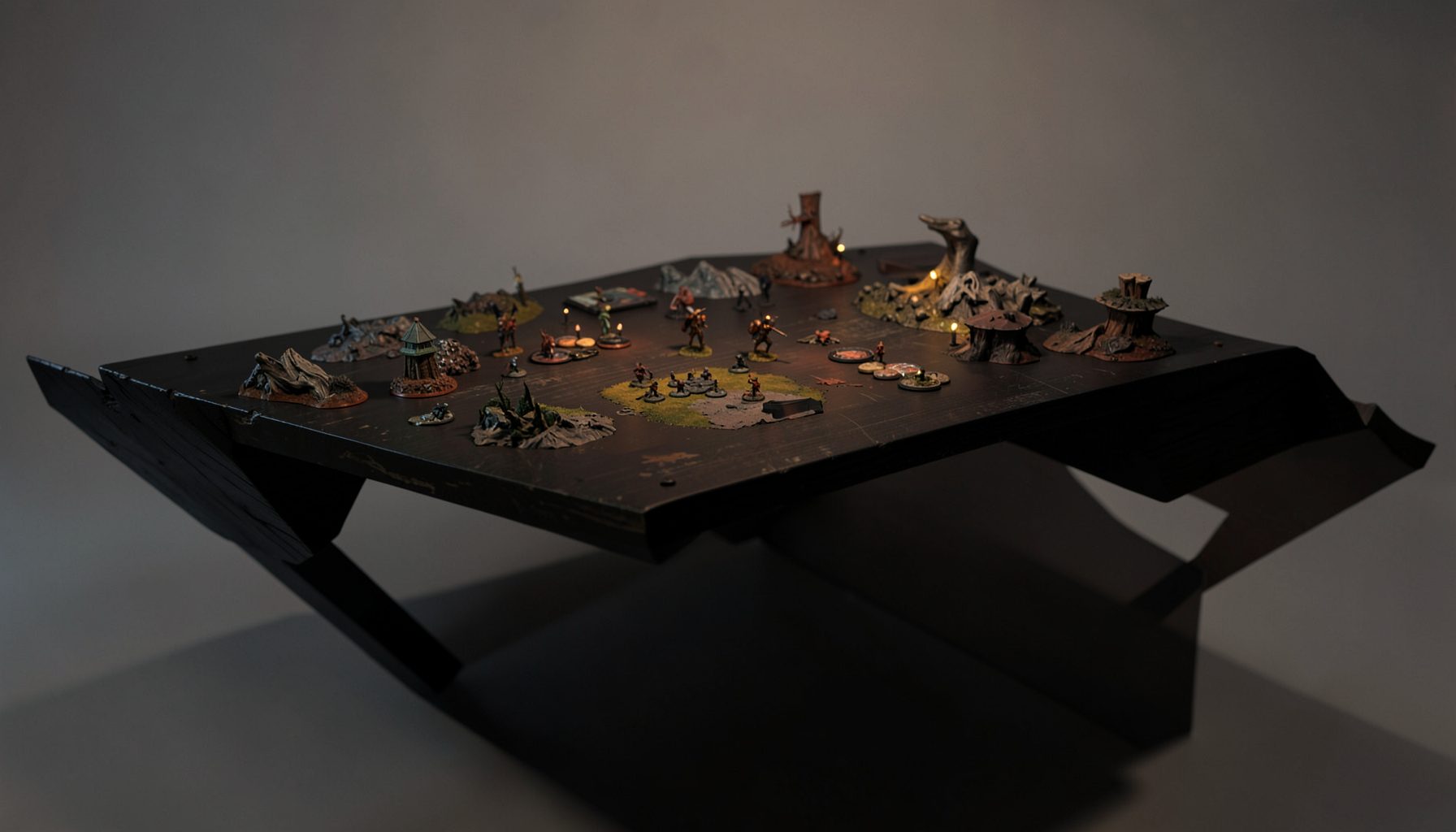
Live-streamed games, recorded matches, and event data gathered in one place.
Kill Team Stream hosts quality live streaming of Kill Team content — tournaments throughout the year on Twitch, regular games streamed to the channel, and tournament data gathered so players can see what's happening in the scene. Powered by WARHAMMER.
Browse tournamentsOfferings
Tournaments
Multiple Kill Team tournaments hosted throughout the year, all live-streamed on our Twitch channel.
Videos
Streams are recorded and uploaded to YouTube alongside original video content we produce.
Event Data
Tournament packets from past events plus resources for upcoming Kill Team tournaments.
Site Directory
Reading the Board: Countering Conceal Orders in a Shooting-Heavy Kill Team Meta
The Conceal order sits at the heart of how Kill Team rewards positional play. In a tournament environment where most lists lean into ranged output, the faction that understands how to manipulate that order tends to dictate the flow of the match. Whether you are running Phobos Strikes or simply facing an opponent who refuses to leave cover, recognising when and why a model is hiding changes how you plan every action.
Australian players heading into the summer circuit, from Brisbane skirmishes at Maelstrom Games to the larger Melbourne events held at the Melbourne Convention and Exhibition Centre during PAX Australia, will notice conceal-centric play has only grown stronger. Local tournament organisers in Sydney, Perth and Adelaide have started scheduling more terrain-dense layouts precisely because the shooting meta punishes players who walk into the open. Learning the rhythm of Conceal is the first step towards beating it.
Reading the Conceal Order and Its Limitations
A model in Conceal cannot be targeted by a shooting attack unless the attacking operative can draw line of sight to more than one point on its base, or the defender is within engagement range of another friendly operative. That single rule shapes almost every decision a careful player makes on the board. Conceal is not invisibility; it is a soft cover mechanic that rewards clever base placement and punishes sloppy movement.
The nuance that newer players miss is that Conceal only protects against ranged attacks. A charging operative can still fight a Concealed model, and Blast or Torrent weapons ignore the order entirely if they can reach the area. Veteran players at CanCon or the Adelaide Tabletop Convention often remind newcomers that stacking cover saves on top of Conceal, like throwing a Smoke Grenade into a corridor, quickly becomes overkill when one solid melee rush ends the trick.
Players should also remember that Conceal breaks the moment a model performs an action that requires line of sight to an enemy, including Guard, Shoot or even some mission actions like Sabotage when an enemy is nearby. Watching your opponent's hand of action cards and forcing them to commit early is a low-cost way to strip their protection before the real shooting phase begins. The order is a tool, not a shield, and treating it as the latter is how shooting lists lose track of board control by the second turning point.
Controlling Engagement Range Through Terrain
Engagement range is the invisible wall that defines the Conceal meta. If you can keep your operatives beyond eight inches of any enemy model, you can almost always shoot freely while staying protected. Australian tournament organisers have responded to this reality by standardising on the Games Workshop Killzone essentials, which provide dense line-of-sight blockers and elevated platforms that favour defensive play.
When setting up for a match, always check the killzone layout the day before. At the Brisbane Games Expo or a casual night at Good Games Sydney, you will often play on one of a few standard configurations, and learning the firing lanes of each saves mental energy on the day. The two-table setups used at local events tend to favour diagonal movement, so planning a path that keeps you on the diagonal rather than crossing open central lanes is almost always correct.
Pushing deep into the opponent's deployment zone often backfires against Conceal-heavy lists. They want you close, because at close range the order becomes a liability and melee threats can collapse your firing lines. Hold the centre objective only if you have the tools to win a melee brawl; otherwise, claim the flanks and let your opponent overextend into your waiting gunners. The best players at the Canberra Road to Nationals qualifier in March turned entire games by refusing to fight on the opponent's terms.
Forcing the Reveal With Saturate and Dash
The single best counter to a defensive shooting list is the Saturate action, which lets you pepper an area with shots regardless of line of sight. Most competitive players overlook it, but Saturate works against Concealed models because the attack is resolved against the closest model in the target area, not against a chosen target. Drop a five-model barrage into a doorway or behind a barricade and the hidden operative must save on its unmodified defence or risk going down without ever having been seen.
Dash is the other underrated tool. A well-timed dash can reposition an operative into a firing lane that forces the concealed enemy to move, breaking their order on the next activation. Players at the Sydney Kill Team League have built entire secondaries around bait-and-switch Dash plays, drawing opponents out of cover by threatening uncontested objectives in their own backline. The order of operations matters: dash first, then use the threat of your new firing position to dictate the opponent's next activation.
Consider using mission actions that ignore the Conceal order entirely, like Secure or Pick Up. These often force defenders to either break cover to contest or hand you free victory points. The Australian competitive scene, particularly at the Perth Winter Open held at the Esplanade Hotel in Fremantle, has rewarded players who blend Saturate pressure with objective play rather than chasing kills. Tournament packs distributed by local TOs now include a "conceal awareness" reminder sheet for new attendees.
Reading Your Opponent's Faction and List
Not all shooting teams rely on Conceal the same way. A Phobos Strike Team uses it to protect long-range bolter volleys, while a Hierotek Circle or Imperial Navy Breacher list uses it to drag fights into melee where their durability shines. Recognising the faction on the table across from you in the first five minutes of deployment saves a lot of pain later.
Against Phobos, push forward aggressively into their half so they cannot use their infiltrators to claim forward positions unopposed. Against melee-leaning shooting factions, do the opposite: hold back, force them to come to you, and let the engagement range rule work in your favour. Australian TO-led podcasts like the Mantic Melbourne Meta often flag which factions are overperforming in the local meta, and matching your opener to that data gives you a measurable edge on the day.
List building also matters. Bringing at least one Blast or Torrent weapon is a near-mandatory inclusion for any tournament-ready roster, and including a model with a rule that ignores cover, such as a Tau Marksman or a Deathwatch Stalker-pattern rifle, lets you cut through the order entirely. Stockists in Melbourne and Brisbane have noted a spike in demand for these specialist kits since the latest balance patch, and entry-fee prize pools at regional events now regularly include them as raffle items.
Tournament Mindset and Streaming Habits
Playing around Conceal is as much a mental exercise as a tactical one. Local players who stream on Twitch from their home setups in Adelaide, Hobart or regional towns have an advantage, because reviewing your own footage reveals patterns you never notice in the moment. Many top Australian competitors upload matches to YouTube specifically to dissect how often they walked past a concealed model without checking its base footprint, then post clips on the community Discord for feedback.
Tournament day itself demands discipline. Hydration matters more than players expect, especially during the Australian summer when January events at the Gold Coast Convention Centre can push the venue temperature above thirty degrees. Tired players make mistakes, and a single lapse in focus lets a concealed Marksman survive one extra turn and swing the game. A spare water bottle and a small towel cost less than a dollar each at any Australian pharmacy and save a lot of heartache.
Talk to other players between rounds. Australian Kill Team communities, whether through the Canberra Discord or the Brisbane meet-up scene, share board photos and match reports openly. Asking an opponent how they positioned their concealed models is a fast way to learn the angles you missed. Pair that habit with the tactical framework above, and the shooting meta starts to feel far more manageable.
| Aspect | Conceal Order | Engage Order |
|---|---|---|
| Protection from shooting | Cannot be targeted unless attacker sees more than one base point | No protection; can be targeted normally |
| Melee interaction | Still vulnerable to charge and fight | Same as Conceal in melee |
| Switching cost | Costs one action to switch between orders | Costs one action to switch between orders |
| Best suited to | Defensive shooting, objective camping, ranged gunlines | Aggressive pushes, melee threats, fast movers |
| Weakness | Saturate area attacks, Blast, Torrent, No Cover weapons | Loses the defensive layer entirely |
| Common factions | Phobos, Hierotek Circle, Tau Pathfinders | Breachers, Wych Cult, assault-oriented lists |
Tournament Packets
Packets from previous Kill Team events are kept here alongside new packets for upcoming tournaments, so organizers and players have what they need in one place.
View Event Data