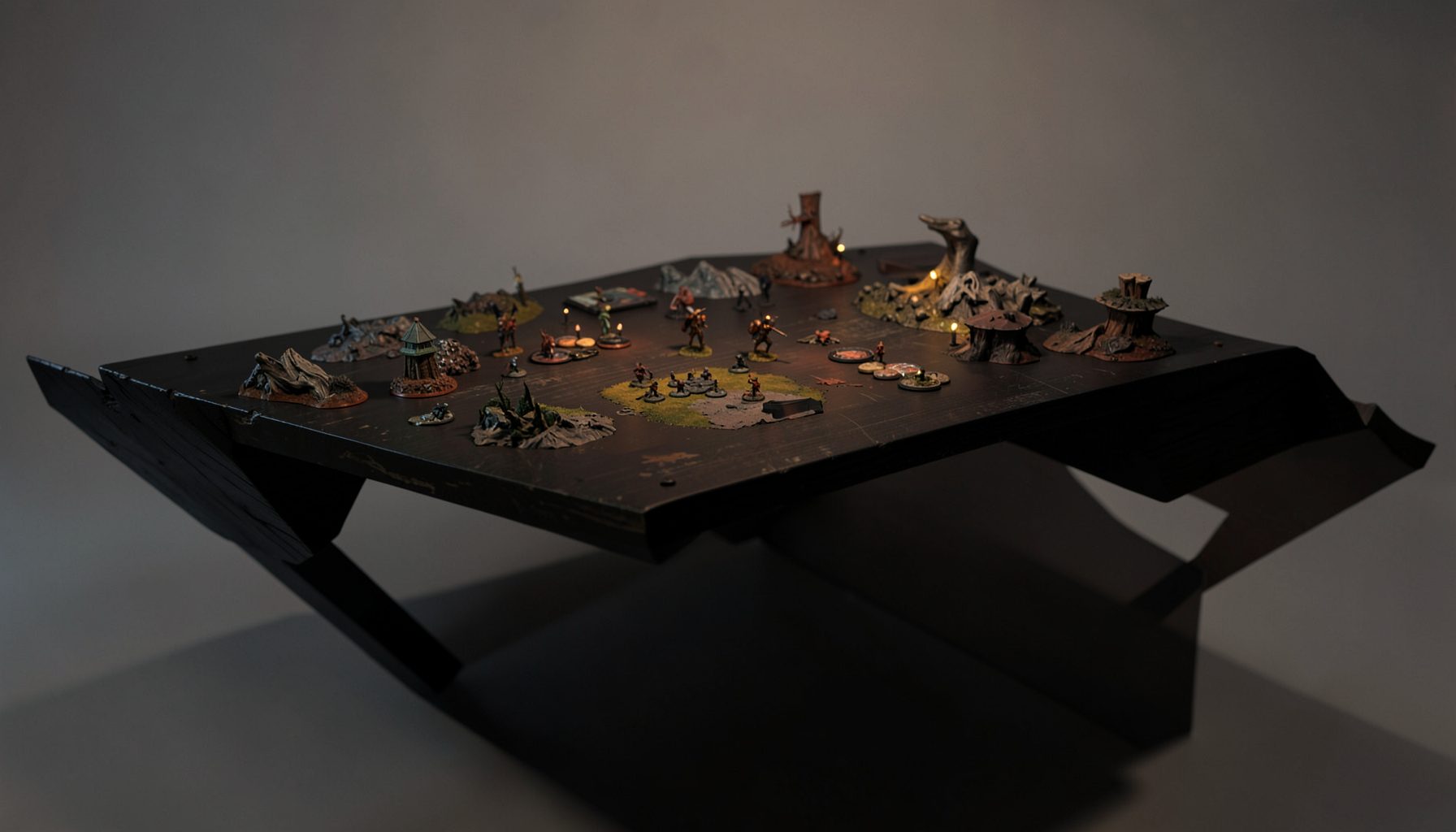
Live-streamed games, recorded matches, and event data gathered in one place.
Kill Team Stream hosts quality live streaming of Kill Team content — tournaments throughout the year on Twitch, regular games streamed to the channel, and tournament data gathered so players can see what's happening in the scene. Powered by WARHAMMER.
Browse tournamentsOfferings
Tournaments
Multiple Kill Team tournaments hosted throughout the year, all live-streamed on our Twitch channel.
Videos
Streams are recorded and uploaded to YouTube alongside original video content we produce.
Event Data
Tournament packets from past events plus resources for upcoming Kill Team tournaments.
Site Directory
Designing a practice schedule for a major Kill Team event
Competitive Kill Team rarely rewards raw talent alone. The players who peak when it matters are usually the ones who treated preparation like a project rather than a hope, with a written schedule, deliberate rest, and a clear list of matchups to drill before the event. Whether you are flying to Canberra for CanCon or driving across town to a Sydney venue for a heavily stacked RTT, the weeks leading up to a major event are when tournament results are quietly decided.
This article walks through how to design a practice schedule that matches Australian tournament calendars and the way local players actually organise their weeks. It covers honest self-assessment, weekly training loads, solo drills, partner play, the realities of travel across the country, and the final taper so you arrive sharp rather than burned out.
Honest self-assessment before the first dice roll
Every credible practice block starts with an audit. Pull out a notebook, open a spreadsheet, or grab a sheet of paper and write down what you actually know how to do with your faction, not what you wish were true. Capture the operatives you are running, the ploys you have memorised, and the matchups you feel confident flipping into late turns. Then write the opposite list: the factions you avoid at casual events, the board edges that still trip you up, and the rule interactions you reach for Google to confirm before each game.
This is also the moment to look at events coming up on the Australian calendar. CanCon in Canberra sits in late January or early February most years and tends to attract a national field. ANZGC events in Brisbane, Mantic-attended opens in Melbourne, and Good Games-run RTTs across multiple states all have their own pocket metas. Knowing which factions you will face most often shapes how you spend your training hours. If Brisbane locals are running a lot of Death Guard and Ynnari, those lists move up the queue. If your home meta is dominated by veteran teams, you spend less time on debutant factions and more on the elites.
Building a weekly training framework
Once the audit is done, build a six-week block. Less than four weeks usually means too much information and not enough muscle memory. More than eight and you risk fatigue long before the event, which is one of the most common reasons promising Australian players underperform at majors. Reserve one full week for tapering at the end. For a CanCon-style major, count back from the Friday your first game is scheduled and mark the boundaries on a calendar you actually look at, not the one buried in an app drawer.
Structure each week around three pillars: solo study, partner drills, and real match play. Two evenings of solo work covering one or two matchups, one partner session of about ninety minutes running critical scenarios, and one RTT or online event closes the loop. Australians used to AEDT will often find their weekday evenings after work are the most consistent slot, with Sunday morning or Saturday afternoon available for longer sessions. Pair your training with the rhythms you already keep, such as the Saturday grocery run, the Friday dinner with mates, or the Sunday recovery walk. Practice that piggybacks on real habits survives the inevitable week when work runs late and motivation dips.
Solo drills, theory, and list editing
Solo sessions look unglamorous but produce the largest gains per hour. Pick a faction you fear or a mission you have lost twice and run through it on a tabletop without an opponent. Set up the killzone, deploy both kill teams in a balanced position, and play both sides for twenty minutes each. You will quickly spot the action economy gaps that explain why your operative felt underpowered and the lines of sight you keep forgetting. This is where priority windows, the difference between fight and shoot-fight actions, and the small print on faction ploys finally stick rather than slipping away between rounds.
Spend a portion of each solo session on theory. Watch a recent high-level game, pause on key moments, and write down what the winning player did on turns two and three. The Kill Team Stream video library is a useful place to compare decision patterns across metas. Make notes on opening deployments, where CP was spent, and how the final three turns were sequenced. Then translate those notes into actual practice on your board, because reading about a clever play and executing it under pressure are very different skills.
Tape a printed cheat sheet above your painting station. List your activation sequence, the CP costs of each ploy, and the mission scoring conditions. Most Australian kitchens already have a fridge door carrying the family calendar, school notes, and a takeout menu. Stick your kill team reference there too and you will memorise the order before opening night without feeling like you have formally studied.
RTTs, online events, and real opponents
There is no real replacement for shaking hands, rolling dice, and making small talk with the opponent across the table. Every RTT you enter in the eight weeks before a major counts as live practice, even the local 12-person events where nobody travelled further than the next suburb. Show up with the list you intend to take to the major. Play every mission. Use the same priming technique you plan to use at the event. Practise logging match data afterwards while it is fresh, ideally in the car park before you have driven home.
Online play fills the gaps between physical events. Australians playing cross-state need to manage time zones carefully. A Perth player available at 8 pm WST is 11 pm AEDT in Sydney, so finding overlap usually means scheduling around weekday lunch breaks in AEDT or accepting later nights. Discord-based kill team communities run regular events that are well worth joining, especially during winter evenings when travel is harder and the lure of staying home is real.
Try to play at least one opponent who runs a different faction archetype every week across the six-week block. The variety prevents overfitting to a single meta. If your local scene is small, a weekend trip to a Melbourne gaming cafe for a friendly kill team night can be worth more than three solo evenings. Pair tournament attendance with post-event reviews where you and a friend walk through each round, marking the decisions you would change and the surprises that affected the result.
Australian realities: travel, weather, and local rules
Big kill team tournaments in Australia often mean long distances. Perth to Sydney is over four hours by air, and even Sydney to Brisbane is more than two hours of driving when you account for petrol stops. Build travel recovery into the schedule. Book a hotel that is genuinely quiet for the night before day one. Wash your dice and organise your army case on Thursday night, not Saturday morning. If you are flying domestically, pack miniatures in your carry-on whenever airlines allow it. Checked baggage handling is rougher than most foam can survive, and a heavy case being dropped is more common than people realise.
Heat is another local reality worth planning around. January and February are peak summer across the southern capitals, and tournament halls sometimes run warm and humid. Bring a small handheld fan, dress in light layers, and keep your army case out of direct sun during the walk from car to venue. Players used to Brisbane or Cairns humidity already know to prime indoors with airflow. Those heading to Canberra in winter should pack a proper jacket, because the morning sessions at the convention centre can be cold enough that your hands slow down between rounds, and dice wobble on cold tabletops.
Australia classifies games and related merchandise through the Australian Classification Board, and miniatures are generally treated as hobby products rather than toys, so importing paints and resin bits through customs is straightforward for personal quantities. Keep receipts handy in case Border Force asks, and remember that GST of ten per cent applies at the till when you buy locally. Many Australian game stores, including larger chains and well-known independents, accept EFTPOS and offer loyalty discounts that shave real money off your hobby spend over a six-week build up.
Taper, rest, and last-minute sharpening
The final week is for polish, not panic. Drop your solo drill sessions to one short block. Skip a partner night to rest your hands and eyes. Eat the meals you trust, hydrate well, and avoid changing your list unless you have spotted a critical flaw you are completely sure about. Sleep is more valuable than an extra practice game. You will learn more from one well-rested day at the event than from a third training night in a row.
On the eve of the event, lay out your army, your tokens, your dice, your mission cards, and your chosen secondaries if any are played manually. Confirm your transport plan and have a backup. When the first game begins, treat round one the same way you treated round three of a Tuesday night RTT. The schedule did its job. Now the dice get to speak.
Tournament Packets
Packets from previous Kill Team events are kept here alongside new packets for upcoming tournaments, so organizers and players have what they need in one place.
View Event Data