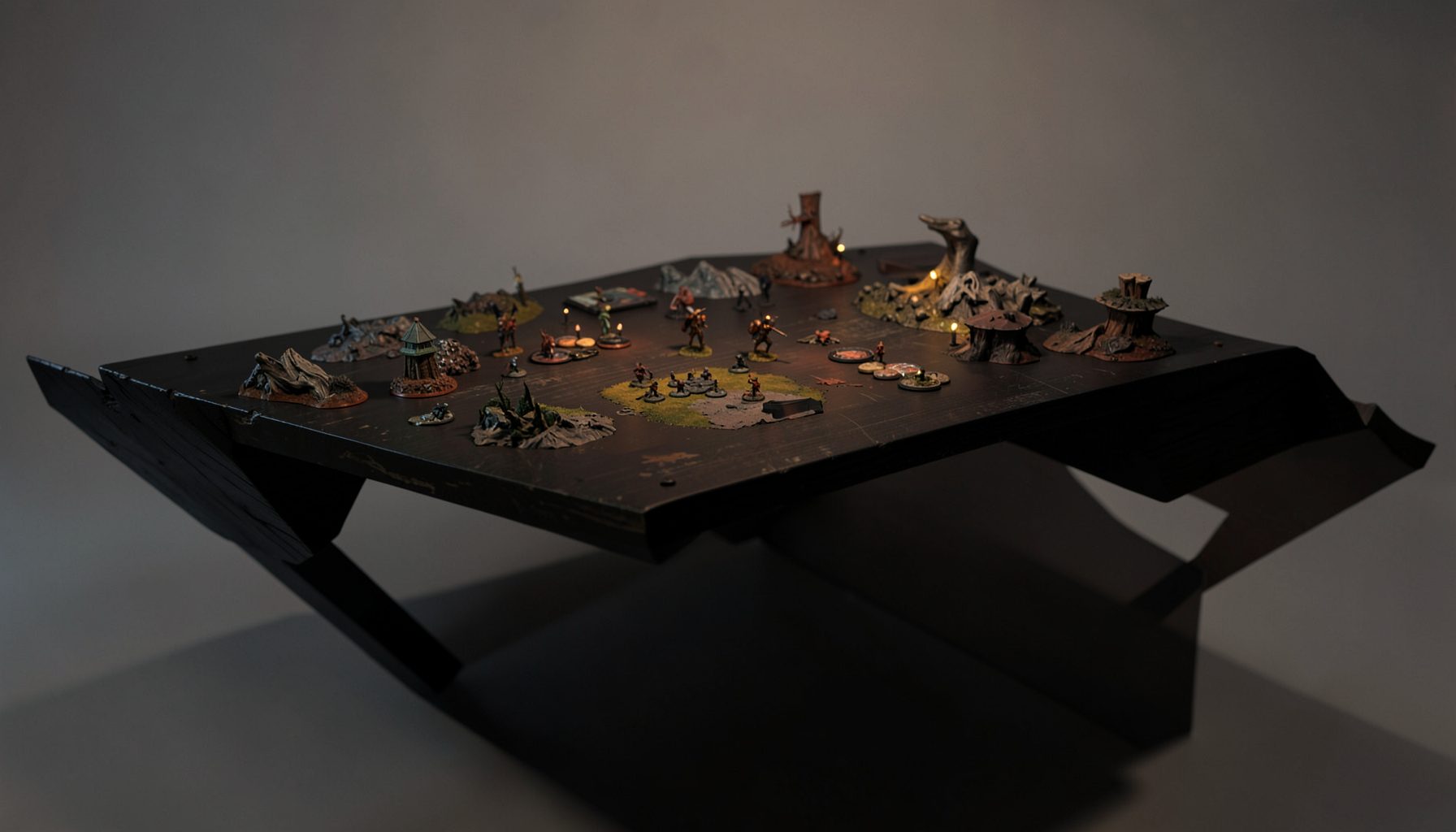
Live-streamed games, recorded matches, and event data gathered in one place.
Kill Team Stream hosts quality live streaming of Kill Team content — tournaments throughout the year on Twitch, regular games streamed to the channel, and tournament data gathered so players can see what's happening in the scene. Powered by WARHAMMER.
Browse tournamentsOfferings
Tournaments
Multiple Kill Team tournaments hosted throughout the year, all live-streamed on our Twitch channel.
Videos
Streams are recorded and uploaded to YouTube alongside original video content we produce.
Event Data
Tournament packets from past events plus resources for upcoming Kill Team tournaments.
Site Directory
Using Barricades to Disrupt Opponent Lines of Fire in Kill Team
The humble barricade often sits on a Kill Team board as a piece of terrain that players walk past without much thought. Yet in the hands of a tactician who understands sight lines, geometry, and opponent psychology, those same walls, crates, and bulkheads become weapons. They deny visibility, channel movement, and quietly rob a firing lane of its threat long before the first plasma bolt flies.
Whether you are playing at a friendly game night in Brisbane or streaming from a tournament in Parramatta, mastering barricade play separates players who simply deploy models from those who actively reshape the battlefield. The skill is less about hiding and more about forcing your opponent into predictable responses that you can read and punish.
Reading the Board and Identifying Firing Lines
Every Kill Team mission is built around a board, and every board is built around angles. Before you set up your operatives, walk the table with your eyes at the height of your miniatures. Crouch if you have to. The line that connects an enemy gunner's marker to the objective you intend to contest is a firing lane, and any unblocked lane becomes a threat the moment your operative steps into it.
Barricades exist to interrupt those lanes. A crate that sits perpendicular to a firing line is far more valuable than one placed conveniently against a wall. Experienced Australian players at venues such as Good Games in Melbourne's CBD or the Games Workshop store in Sydney's George Street often spend the first minutes of deployment sketching sight lines on paper. Some even carry small notebooks with pre-drawn templates for standard Kill Team terrain layouts.
The local terrain kits also matter. Australian Games Workshop stock is shipped through the official distributor and includes the same modular terrain as European stores, so players in Adelaide or Perth will face barricade configurations similar to those in Hobart. Recognising standard placements helps you predict opponent cover and plan moves that route around, rather than into, fields of fire.
Positioning Your Operatives Behind Cover
Cover in Kill Team is binary in name but layered in practice. A barricade grants the Obscuring or Heavy terrain traits depending on its type, and these traits interact with ranged attacks in specific ways. Position your operative so that the barricade sits exactly between the barrel of the enemy weapon and the body of your model. Half-cover angles are a mistake beginners make when they lean models too far around a corner.
Australian tournament organisers, including those running events under the ITC-style rankings used by clubs in Brisbane and Canberra, often remind players during briefings that the model itself, not its base, determines line of sight. Players from warmer states, where summer heat makes long events physically demanding, also tend to play tighter defensive lines because fatigue affects their ability to reposition late in the round.
When you stack two operatives behind a single barricade, remember that the second model will often break the Heavy trait benefit. Spread your team instead. A barricade that screens two operatives is twice as effective as one that hides a single model, and the operational tempo you maintain by staying spread keeps your opponent guessing about your next activation.
Creating Funnels and Chokepoints
Barricades do their best work when they shape the map rather than decorate it. A single wall pushed forward by one inch can turn a wide street into a corridor, forcing your opponent to walk models through a kill zone rather than across open ground. This is where the geometry of the board becomes more important than the weaponry in your list. A barricade that funnels opponents into a charge from your melee operative is worth more than any ranged weapon you could field.
The Australian terrain aesthetic often inspires board design. Players in Fremantle or Newcastle sometimes build custom barricades resembling shipping containers, water tanks, and industrial scaffolding. These elements introduce new angles and create chokepoints that feel natural to the local landscape. When a barricade looks like part of a working dock or refinery, players instinctively treat it as part of the architecture, which reinforces the funneling effect.
Chokepoints also interact with mission rules. In missions that reward holding objectives, a barricade placed to deny an opponent easy access to a central point becomes a force multiplier. A model contesting that objective will be exposed, but the threat of a counter-charge through a narrow gap makes the opponent's approach costly. This dynamic is particularly visible in the competitive scenes of Melbourne and Sydney, where missions like Loot and Salvage or Priority Targets reward defensive positioning with barricade support.
Combining Barricades With Concealment and Equipment
Barricades are rarely used alone. Pair them with smoke grenades, the Conceal action, or faction-specific abilities that improve saving throws while in cover. A barricade without smoke is a static benefit; a barricade with smoke becomes a zone where ranged attackers must choose between wasting actions or risking close combat.
Local player habits reflect this layering. Many Australian hobbyists store custom barricades alongside spare objective markers and tokens in the same carry case, which encourages them to bring terrain that complements their faction's strengths. Tasmanian and Victorian players in particular tend to invest in modular barricade sets that snap together, allowing them to create unique firing lane disruptors for each matchup.
Equipment that interacts with terrain also rewards barricade-savvy players. Grappling hooks, climbing gear, and faction abilities that ignore movement penalties near walls all become more potent when barricades define the routes opponents must take. Read the terrain rules carefully. A barricade that blocks sight lines may also block charges if it has the right trait, and that single detail can swing a turn from a trade to a clean elimination.
Forcing Repositions and Punishing Predictability
Once your barricade network is in place, watch your opponent's eyes. Predictable players will route their operatives toward cover because it feels safe, even when that cover funnels them straight into your prepared firing lanes. A barricade placed to look like a shield can actually be a trap when the operative behind it realises they have walked into a crossfire.
| Approach | Strength | Weakness | Best Barricade Setup |
|---|---|---|---|
| Reactive Defender | Maximises cover saves, conserves actions | Cedes initiative, slower objective play | Solid walls with Heavy trait near objectives |
| Aggressive Flanker | Controls pace, denies opponent firing lanes | Requires positioning skill, vulnerable early | Light barricades as visual screens, not cover |
| Objective Holder | Locks key terrain features | Predictable, can be bullied in melee | Stacked barricades forming a firing platform |
| Tempo Disruptor | Forces opponent reroutes | Trades long-term board control for short-term pressure | Mobile barricades such as crates pushed each turn |
Australian Kill Team events, particularly those streamed from venues like Milspec Games in Brisbane, often highlight how a patient defender using barricade networks can outlast an aggressive opponent. The reactive style is forgiving for newcomers, while experienced players in the national rankings tend toward flank-and-punish play that uses barricades as misdirection rather than cover.
Forcing repositions is its own resource. Every action your opponent spends moving instead of shooting, charging, or completing objectives is a small victory for you. A barricade that buys you two wasted actions over a game is often the difference between a draw and a clear win.
Practice Drills and Tournament Habits
Barricade skill improves through deliberate practice, not just games. Set up three barricades in your kitchen, lounge room, or the local games cafe and run solo drills where you move a single operative through the layout, checking sight lines from each direction. Australian players benefit from year-round mild weather in coastal cities like Cairns and the Gold Coast, where outdoor painting and small-scale terrain building sessions are common during the cooler half of the year.
Tournament habits also matter. Pack spare barricades in your tournament box. Australian events frequently run multiple rounds on boards assembled by different organisers, and terrain consistency varies. A personal barricade ensures you always have a piece of cover you understand, which can be the anchor your whole strategy depends on. With Australia Post shipping often slower than overseas retailers offer, ordering spare pieces in advance avoids last-minute scrambles before a major event.
Finally, watch the streams. Kill Team Stream regularly features Australian commentators analysing how top players manipulate firing lanes on the international circuit. Pay attention to the moments before the action starts, when operatives pause behind barricades and players weigh risks. Those quiet seconds hold the key to turning static scenery into the backbone of a winning plan.
Tournament Packets
Packets from previous Kill Team events are kept here alongside new packets for upcoming tournaments, so organizers and players have what they need in one place.
View Event Data