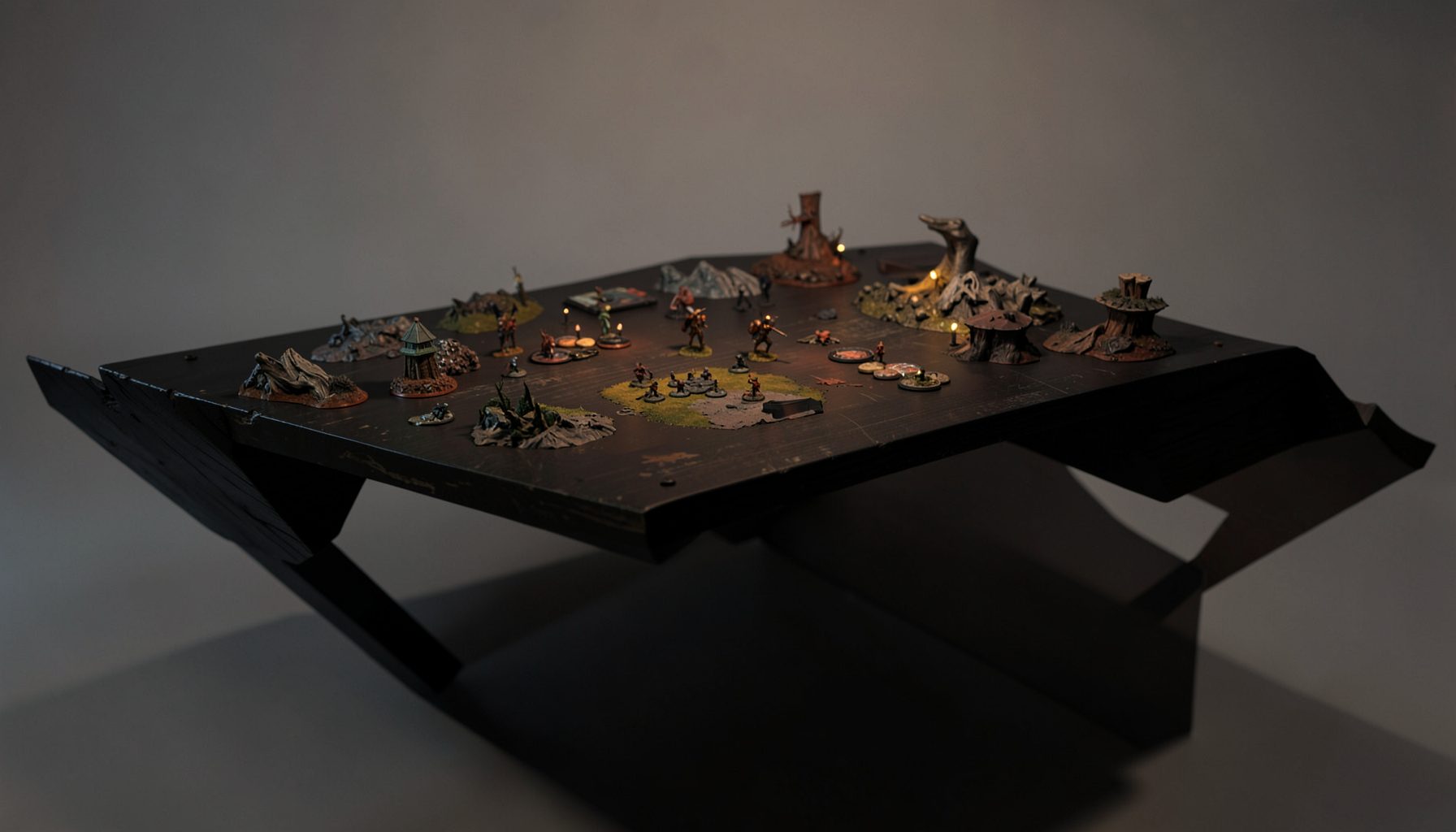
Live-streamed games, recorded matches, and event data gathered in one place.
Kill Team Stream hosts quality live streaming of Kill Team content — tournaments throughout the year on Twitch, regular games streamed to the channel, and tournament data gathered so players can see what's happening in the scene. Powered by WARHAMMER.
Browse tournamentsOfferings
Tournaments
Multiple Kill Team tournaments hosted throughout the year, all live-streamed on our Twitch channel.
Videos
Streams are recorded and uploaded to YouTube alongside original video content we produce.
Event Data
Tournament packets from past events plus resources for upcoming Kill Team tournaments.
Site Directory
Using the Fall Back Action to Reset a Bad Engagement in Kill Team
Every Kill Team player has stared at the board at some point and realised their operative is staring down the barrel of a bad situation. Whether you have charged into a room only to discover three enemy operatives waiting in overwatch, or you have moved a shooter into what you thought was a great firing lane only to find it blocked by heavy terrain, the tactical picture changes fast. Many players freeze, hoping their dice will save them. Experienced competitors know better. One of the most underrated tools in your action economy is the humble Fall Back action, and learning when and how to use it can flip a doomed engagement into a winning position.
The Fall Back action lets an operative move up to their Movement characteristic without the risk of enemy reactions, provided they finish the move further away from every enemy operative than they started. It sounds simple, but in the heat of a Turning Point it is easy to forget you have the option. Players who compete at events from Brisbane to Perth, and from the Melbourne tabletop scene down to Hobart, often credit a well-timed retreat as the difference between a top-table finish and a first-round exit. Streaming those moments on platforms like tournament streams and replays shows just how often the better player disengages rather than commits.
What the Fall Back Action Actually Does
The Fall Back action is one of the universal actions available to every operative, regardless of faction or kill team composition. When you activate an operative, you can choose Fall Back instead of shooting, fighting, or any other standard action. The operative then moves a number of inches equal to their Movement characteristic, but with a strict positional outcome: they must end their move further from every enemy operative than where they began. They cannot move within Engagement Control Range of an enemy, and they cannot use Falling Back to set up a charge in the same activation.
Because the action uses up the operative's entire activation, it is essentially a tactical withdrawal. You trade the chance to deal damage, score a point, or contest an objective for the promise of a better position next turn. In a game as tight as Kill Team, where every activation matters, that trade has to be worth it. Many new players treat Fall Back as a defensive crutch, something you only do when you have already lost a fight. The reality is that the best Australian players treat it as a proactive tool, something they plan two or three activations ahead.
A useful way to think about it is in terms of action economy. If your operative is stuck in a bad spot, shooting at reduced effectiveness or charging into a chokepoint where they will die, that activation is already partially wasted. Falling Back preserves your operative for a future activation where they can actually contribute. Sometimes the most important click for someone playing a tabletop game with friends, or even unwinding with casual game portals after a long day at the office, is knowing when to step away and reset.
Recognising a Bad Engagement Before It Happens
The hardest part of using Fall Back well is not the action itself. It is reading the board correctly two or three activations before things go sideways. A bad engagement is usually signalled by a few common patterns. The first is range. If your operative is within half-range of two or more shooty models with good line of sight, they are probably going to take more damage than they can deal. The second is positioning relative to cover. Standing in the open, even for a single activation, often ends in an operative being gunned down by opponent overwatch or counter-fire.
Another tell is opponent activation order. Watch which models your opponent activates in which order. If they are deliberately holding back a heavy-hitter, a combat specialist, or a flamer-wielding operative until after your key model has moved, that is a sign you are walking into a prepared trap. At local events in Sydney, where the competitive scene is particularly active, players often discuss board state after the fact and realise they could have predicted the trap a full Turning Point earlier.
The final signal is objective pressure. If your operative is contesting a point but is going to lose a fight or be killed, the objective may end up in opponent hands anyway. In that situation, withdrawing to a position where you can use the next activation to re-contest, or to draw the opponent out of position, is often the better play. Fall Back is not about running away. It is about investing this activation in a better one next turn.
Repositioning With Intent
Choosing where to fall back to is where the action becomes art. The first rule is to seek hard cover. Terrain in Kill Team is generous, and a single heavy piece can completely block line of sight from two or three enemy operatives. Operators who play regularly at clubs in Adelaide or the Gold Coast often practice specific retreat paths so they know exactly which piece of terrain will shield them from the most dangerous firing lanes.
The second rule is to think about angles. Falling Back directly away from the threat is sometimes correct, but often a diagonal retreat that breaks line of sight to a different set of enemies is better. Try to end your move behind a piece of terrain that protects you from the model's biggest threats, while keeping you in range of a counter-attack opportunity if one presents itself. Watchpoint placement, line of sight, and the position of your teammates all matter here.
The third rule is to think about the opponent's ability to punish you. If they have operatives with long ranged weapons, or models that can charge after you Fall Back, you want to retreat to a place where they cannot easily follow. Sometimes that means retreating into your own deployment zone, especially in missions where holding your home objective matters. Sometimes it means moving laterally to a completely different part of the board, dragging the opponent out of their preferred firing lanes and into yours.
Turning Retreat Into a Tactical Advantage
The best players do not retreat, they reposition with purpose. Falling Back can bait opponents into exactly the kind of overcommitment you want. If you withdraw a wounded operative from a fight, the opponent may push forward to claim the territory, only to find themselves out of position when your next operative activates. This kind of give-and-take is a hallmark of high-level play and regularly decides matches at regional qualifiers held across the country.
Once you have drawn the opponent out of position, your team can punish them. A retreating operative who lures a heavy-hitter into the open, away from their supporting fire, can quickly become bait for a counter-charge or a focused volley from your own shooters. The action you gave up to Fall Back suddenly becomes the setup for an action your opponent hands you for free. Skilled players in the Brisbane meta have built entire team concepts around this kind of trap play, using mobile operatives to pull enemy units out of cover and into the firing lanes of their friends.
The key psychological element is tempo. Many players expect their opponent to commit. When you Fall Back instead, they often overextend in the next Turning Point, trying to punish what they perceive as weakness. That overextension is your opening. By the time they realise they have walked into a worse position than they started in, you have already seized the objective they abandoned or the firing lane they vacated. The retreat becomes a counterattack by another name.
Drilling the Retreat in Practice Games
No tactic becomes second nature without repetition. Setting up practice games with a specific focus on Fall Back is one of the best investments you can make, especially in the weeks leading up to a competitive event. Pick a mission, deploy normally, and challenge yourself to use the Fall Back action at least once in each Turning Point for the first few games. It will feel wasteful. You will lose operatives you could have killed or objectives you could have held. That discomfort is the point.
Once the action becomes instinctive, start adding constraints. Try to Fall Back only to positions that benefit your next activation. Try to use the retreat to bait an opponent into a trap. Try to plan your Fall Back three activations in advance and execute the sequence without deviating. These kinds of focused drills are common at serious clubs in Perth and Canberra, where players treat the game like any other competitive pursuit.
Finally, watch better players. Recorded matches, live tournaments, and commentary breakdowns all show how the Fall Back action gets used in real pressure situations. Watching how an opponent reacts to a well-timed withdrawal tells you as much about their playstyle as it does about your own. The more you see it in action, the easier it becomes to spot the moment in your own games when a retreat is the right call rather than a sign of weakness.
Tournament Packets
Packets from previous Kill Team events are kept here alongside new packets for upcoming tournaments, so organizers and players have what they need in one place.
View Event Data