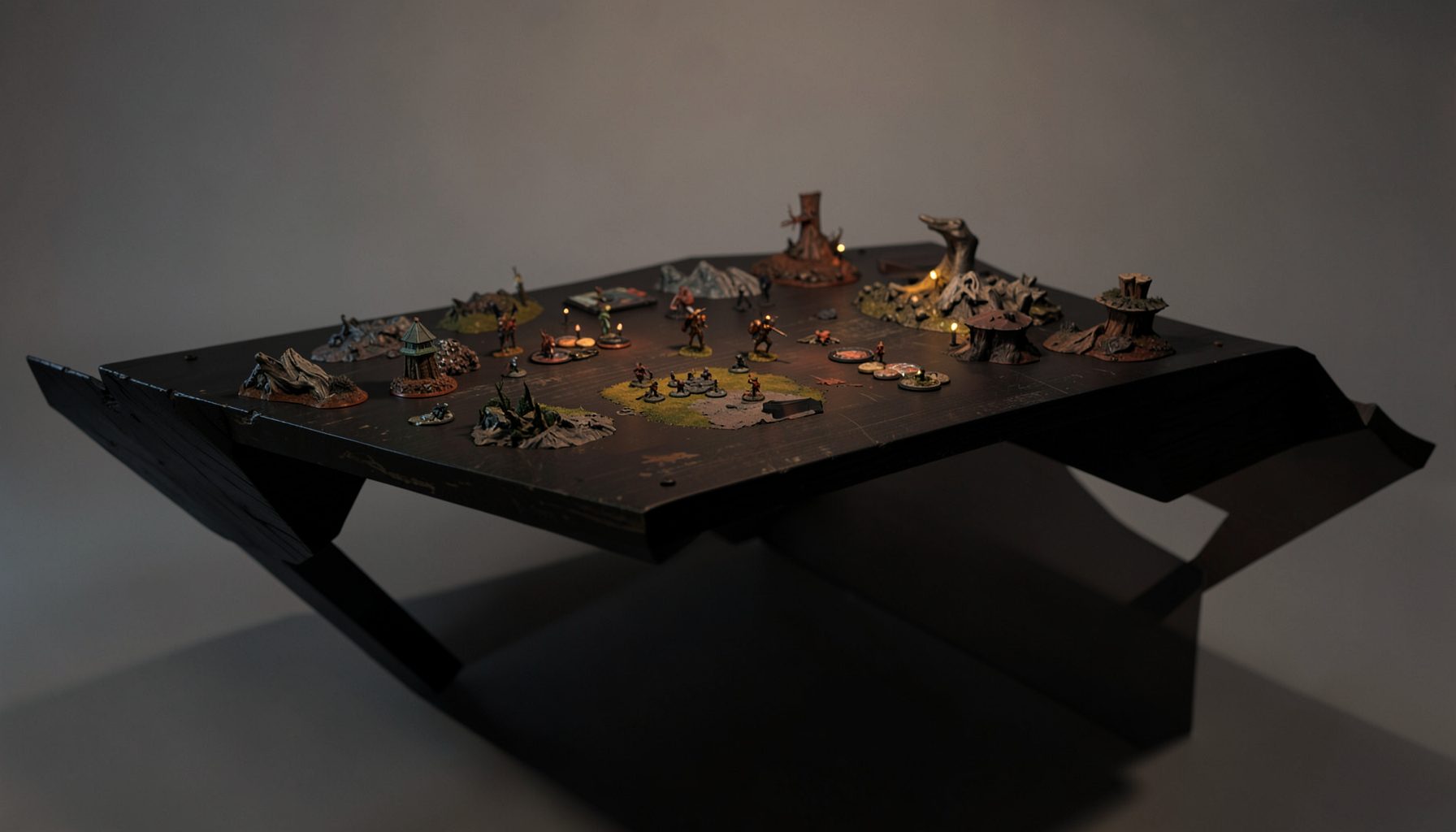
Live-streamed games, recorded matches, and event data gathered in one place.
Kill Team Stream hosts quality live streaming of Kill Team content — tournaments throughout the year on Twitch, regular games streamed to the channel, and tournament data gathered so players can see what's happening in the scene. Powered by WARHAMMER.
Browse tournamentsOfferings
Tournaments
Multiple Kill Team tournaments hosted throughout the year, all live-streamed on our Twitch channel.
Videos
Streams are recorded and uploaded to YouTube alongside original video content we produce.
Event Data
Tournament packets from past events plus resources for upcoming Kill Team tournaments.
Site Directory
How to Use Twitch Polls During a Kill Team Matchnight
A well-timed Twitch poll can turn a streamed Kill Team game from a one-way broadcast into a shared tactical conversation. Viewers can predict an operative’s next move, weigh up a risky objective play or decide which match-up deserves a closer look, while the players remain focused on the table.
For Australian viewers, interaction also helps bridge distance. A tournament in Melbourne may be running at a convenient evening hour for Sydney or Brisbane, while Perth viewers may be watching much earlier. Clear poll windows, useful context and fast commentary make the stream easier to follow across the country and give local events a stronger community feel.
Plan Polls Around The Match
Polls work best when they are attached to a specific game state. Opening one as soon as the stream begins can create activity, but viewers have little information to use. Wait until the teams are deployed, the primary objectives are visible and the commentators have explained the immediate tactical problem.
A simple matchnight rhythm could include one prediction before the first turning point, one decision poll during the mid-game, and one reflection poll after the result. This keeps interaction regular without making every activation feel like a vote. A best-of-three stream might use a separate poll for each map or mission, while a single tournament feature match may need only two or three carefully chosen questions.
Use the Twitch stream title, match overlay and spoken commentary to identify the teams and mission. Kill Team has many operatives, ploys and secondary objectives, so a poll that says “What should they do?” is less useful than “Should the Veteran Sergeant contest the central objective this turning point?” Specific wording produces better predictions and more informed chat.
Choose Questions With Real Tactical Tension
The strongest poll questions have two or more credible answers. If one option is obviously correct, the result measures recognition rather than judgement. Ask viewers to assess a trade-off: score now or preserve an operative, spend command points or save them, hold a vantage point or contest a primary objective.
Useful formats include prediction polls, tactical-choice polls and knowledge checks. Prediction polls can ask which team will lead at the end of the turning point. Tactical polls can focus on the next activation. Knowledge checks can test rules or mission details, but the commentator should explain the answer afterwards so new players learn from the result.
Avoid wording that assumes knowledge of hidden information. Viewers cannot make a fair choice if the camera does not show the relevant token, equipment or score. When a rule interaction matters, pause long enough for the caster to describe it. A short verbal explanation is particularly valuable for people discovering competitive Kill Team through a Twitch broadcast.
A well-prepared roster also gives the broadcast more poll opportunities. Mission selection and deployment can create meaningful questions before the first activation, especially when a team has several viable specialists. The guide on adaptive Kill Team rosters can help commentators frame those choices around flexibility rather than simply asking viewers which faction looks stronger.
Configure Twitch Polls For Fast Participation
Set up the poll from the Creator Dashboard or the stream’s Quick Actions before the match reaches its critical moment. Prepare the question, answer choices and duration in advance where possible. During live play, a moderator can launch the poll while the caster continues explaining the position, reducing dead air and avoiding rushed spelling.
Keep the voting period long enough for viewers to notice it, read the context and make a choice. A brief poll suits a dramatic decision that must happen immediately; a longer window is better during movement, score calculation or a rules discussion. The exact duration should match the pace of the game rather than follow a fixed script.
Tell viewers how to vote in plain language. A line such as “Vote in the panel below the video; the result closes in 45 seconds” is clearer than assuming regular viewers know where Twitch places interactive features. Repeat the question verbally once, then let the overlay or chat command carry the reminder.
Moderators should watch for duplicate questions, unclear options and chat confusion. If a rules clarification changes the situation, close the poll and explain why rather than leaving an outdated vote active. Accurate moderation builds trust, especially when the audience includes players who may later use the stream to study tournament play.
Match Poll Types To The Broadcast Moment
Different moments need different forms of audience participation. A pre-match poll can ask which team will score first, while a deployment poll can invite viewers to identify the most important lane or objective. During the turning point, a tactical poll should be short and concrete. After the game, a review poll can ask which decision changed the result.
| Match Moment | Useful Poll | Ideal Question Style | What Commentary Should Add |
|---|---|---|---|
| Before deployment | Match prediction | Which team will win? | Faction strengths, mission and recent form |
| After deployment | Map or objective focus | Which area matters most? | Threat ranges, cover and scoring routes |
| Before a key activation | Tactical choice | Push, hold or reposition? | Available actions and likely consequences |
| Mid-game score check | Comeback prediction | Can the trailing team recover? | Victory points, resources and remaining turns |
| After the final score | Performance review | Which decision mattered most? | Clear explanation using the replay or board state |
Prediction polls are excellent for bringing casual viewers into the stream because they require little specialist knowledge. Tactical polls reward deeper engagement and can reveal how experienced players read a position. Use both, but label them clearly so a new viewer does not feel that every question requires tournament-level rules knowledge.
The result should become part of the commentary. If 70 per cent of viewers favour a conservative activation and the player takes a risk instead, explain the difference between the crowd’s expectation and the player’s calculation. The poll then becomes analysis rather than decoration.
Use Results To Drive Commentary
A poll result is most valuable when it gives the casters a new angle. They can compare the audience prediction with the actual play, identify why a popular option was unsafe, or note that the chat recognised a threat before it became visible on stream. This creates a natural feedback loop between the table and the audience.
Avoid presenting the majority vote as an objective answer. Competitive Kill Team often contains incomplete information, probability management and faction-specific tricks. The player may choose an unpopular line because they know their remaining resources, a hidden ploy or a future scoring requirement that viewers cannot fully see.
After the activation, revisit the poll briefly. “Most viewers expected the Intercessor to hold, but the advance opened a charge lane next turn” gives the audience a useful lesson without slowing the match. A post-game review can also show whether the winning choice was strategically sound or merely fortunate.
This approach suits educational broadcasts particularly well. A caster can explain why a small-base operative blocked a route, how a mission action affected priority, or why preserving a specialist mattered more than immediate damage. Polls become a teaching tool for new players and a debate prompt for experienced competitors.
Respect Australian Viewing Habits
Australian matchnights often serve audiences spread across several time zones. A stream starting at 7 pm in Sydney or Melbourne may be at 6 pm in Brisbane, 5:30 pm in Adelaide and 4 pm in Perth, with daylight saving changing the relationship again. Display the local event time and the expected poll windows in the stream schedule so viewers know when to join.
Long travel distances also shape the tournament community. Players may drive from regional New South Wales, Victoria or Queensland to a major event, while Western Australian competitors face a much larger logistical gap. A poll asking viewers to predict the winner can acknowledge those local rivalries without turning the broadcast into faction or city tribalism.
Consider Australian viewing routines when choosing the length of the stream. Some viewers will be watching after work, university or an evening club session, while others may be catching up on YouTube later. Keep poll questions understandable in the recording by repeating the relevant board state, since an on-demand viewer will not see the live chat’s earlier context.
Local language can add warmth, but clarity matters more than forcing slang. References to an arvo club game, a Melbourne venue or a Brisbane start time can make the broadcast feel grounded. The same poll structure can work for a Sydney major, a Canberra event or a smaller community tournament, provided the question reflects the actual match.
Moderate Fairly And Protect The Competitive Focus
Twitch chat can be enthusiastic, but it can also become noisy when viewers strongly support a faction or player. Establish simple rules before the stream: no coaching active players, no targeted abuse, no spoilers from another table and no claims about cheating without evidence. A moderator should remove disruptive messages quickly while allowing good-faith disagreement.
Do not let polls expose private information or pressure a player into explaining a decision before they are ready. The audience can discuss visible tactics, but the stream team should not reveal a player’s planned move if the camera or microphone has captured something that the opponent has not reasonably noticed.
Use neutral option labels. “Safe score” and “reckless blunder” can bias the audience before voting begins. “Score the objective” and “Take the attack” allow the caster to explain the advantages and drawbacks fairly. Neutral language is especially important when a poll appears in a recorded video that may be watched months after the event.
If Twitch tools fail, keep the broadcast moving. The commentator can ask for A or B in chat, use a simple countdown or save the question for the next turning point. A poll should enhance the matchnight, never interrupt a crucial activation or create uncertainty about the official result.
Measure Engagement Without Chasing Every Vote
Review poll performance after the broadcast. Look at participation, completion rate, chat activity around the question and whether viewers remained through the result. A poll with fewer votes may still be valuable if it generated a detailed rules discussion, while a large prediction poll may reveal little about tactical understanding.
Compare formats across different events. A local evening stream may receive stronger participation from a short pre-match question, while a weekend tournament audience may engage with longer strategic polls. Track the mission, faction pairing and match stage so a result is not mistaken for a universal preference.
Use the findings to improve future broadcasts, but keep the game central. Too many polls can make a serious tournament feel like a constant quiz, while too few leave viewers with no way to participate. The best matchnight has a clear competitive narrative, informed casting and occasional moments where the audience can make its voice visible.
When used with discipline, Twitch polls help Kill Team Stream connect entertainment with education. They invite viewers to read the board, test their predictions and understand why a player chose one line over another. That combination gives Australian tournament coverage a stronger community identity while preserving the focus, fairness and tension that make competitive Kill Team compelling.
Tournament Packets
Packets from previous Kill Team events are kept here alongside new packets for upcoming tournaments, so organizers and players have what they need in one place.
View Event Data