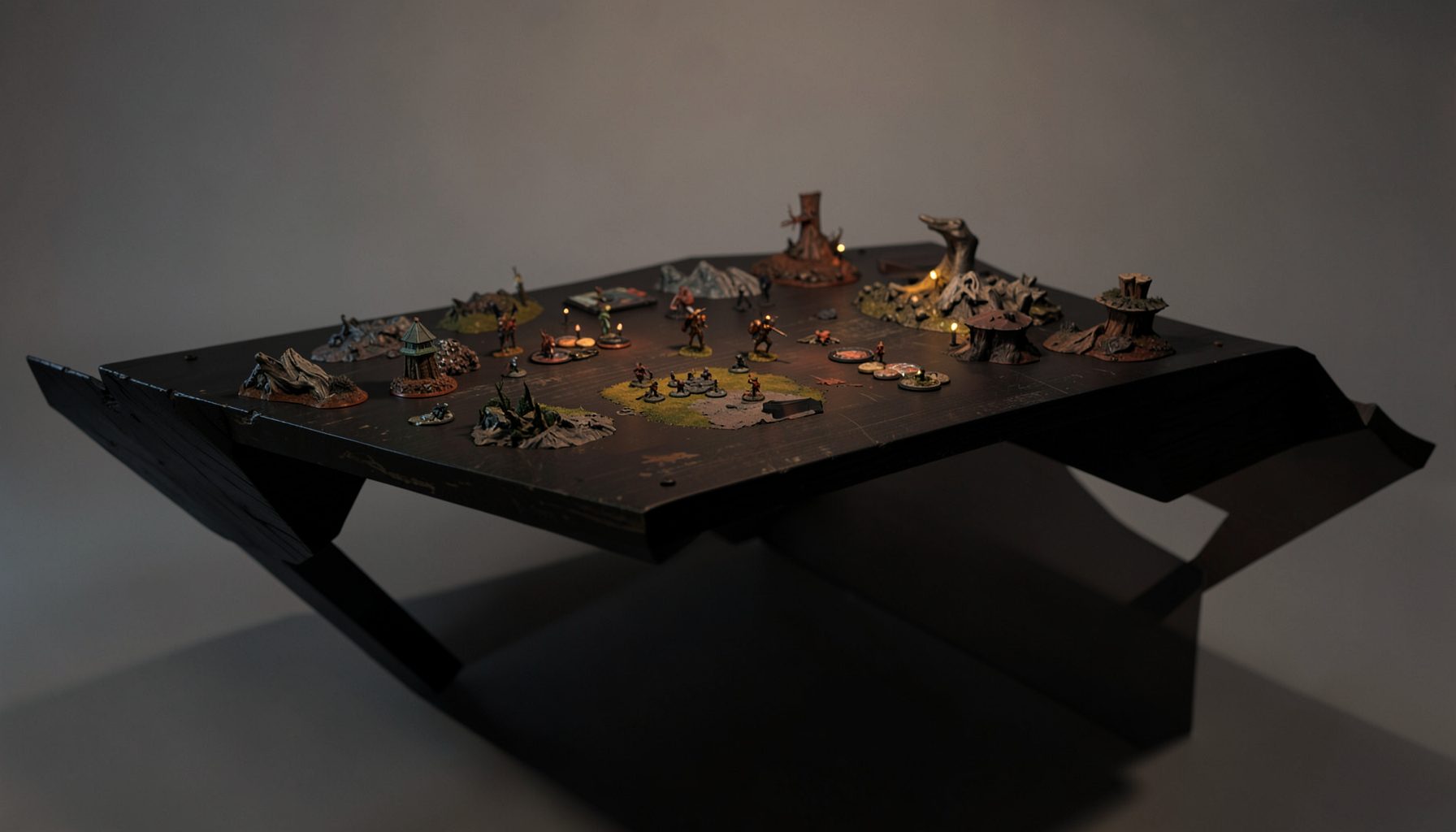
Live-streamed games, recorded matches, and event data gathered in one place.
Kill Team Stream hosts quality live streaming of Kill Team content — tournaments throughout the year on Twitch, regular games streamed to the channel, and tournament data gathered so players can see what's happening in the scene. Powered by WARHAMMER.
Browse tournamentsOfferings
Tournaments
Multiple Kill Team tournaments hosted throughout the year, all live-streamed on our Twitch channel.
Videos
Streams are recorded and uploaded to YouTube alongside original video content we produce.
Event Data
Tournament packets from past events plus resources for upcoming Kill Team tournaments.
Site Directory
Kill Team player contracts for fairer matches
A competitive Kill Team match begins before the first operative is deployed. Players bring assumptions about terrain, mission rules, proxies, dice, timing, and sportsmanship to the table. When those assumptions differ, a small misunderstanding can become a rules dispute, a clock problem, or an avoidable source of frustration.
A player contract is a short, practical agreement between opponents about how the game will be played. It is not a legal document and does not replace the event packet, tournament FAQ, or official rules. Instead, it makes expectations visible before the round starts, giving both players the same reference point.
This habit is especially useful at streamed tournaments and larger events, where round time, scoring, and public visibility add pressure. A clear agreement helps competitive players focus on decisions and gives newer players a safer way to ask about procedures without feeling that they are slowing the match down.
Why a pre-match agreement matters
Kill Team contains many decisions that are strategically important but procedurally easy to misunderstand. Players may interpret pregame sequencing, objective control, measuring, line of sight, or terrain rules differently. Even when both players are acting in good faith, unclear expectations can interrupt the flow of a round.
A brief conversation also establishes a shared standard for courtesy. It can cover how to announce abilities, when to ask for a pause, how to handle missed information, and whether either player needs a moment to check a rule. These details protect the quality of the game without making the interaction feel formal or hostile.
The agreement should be mutual rather than a demand from the more experienced player. A strong player contract gives both opponents equal clarity and leaves room for the event’s judge or head referee to make the final ruling. If a local convention conflicts with the packet, the packet takes priority.
Define the competitive environment
Start by identifying the rules framework for the round. Confirm the edition, approved kill teams, balance updates, errata, mission pack, and any event-specific restrictions. At a casual gathering, the answer may be simple. At a tournament, players should rely on the organizer’s published documents rather than memory or online discussion.
Review the terrain and deployment setup before rolling for initiative. Agree on which pieces are accessible, hatchable, scalable, heavy, or obscuring according to the mission and event rules. Confirm objective markers, barricades, measuring tools, and the boundary of the killzone. A few minutes spent checking the board can prevent arguments once models are in dangerous positions.
Army presentation deserves the same clarity. Each player should identify operatives, equipment, ploys, faction rules, and any proxy or conversion that might be difficult to recognize. If a model’s weapon or specialist role is represented by an alternative sculpt, say so before the game. Competitive opponents should never have to guess what a model represents after an attack is declared.
Set expectations for rules and timing
Agree on how information will be communicated during play. Players can decide that an operative’s intended action, target, and relevant ability will be stated before dice are rolled. This does not require theatrical narration, but it does give the opponent a fair chance to respond with a reaction, confirmation, or rules check.
Timing should be discussed before the round begins. Confirm whether the event uses a chess clock, shared round timer, or informal time management. If a clock is active, decide who operates it, when it switches, and how judge calls affect the timer. If there is no clock, both players should still monitor pace and notify an official early if the game risks running out of time.
| Area to agree | Practical question | Useful default |
|---|---|---|
| Rules source | Which packet, FAQ, and balance update apply? | Use the organizer’s current documents |
| Terrain | How are special terrain traits and boundaries defined? | Confirm before deployment |
| Proxies | What does each substitute model represent? | Explain every non-obvious model |
| Dice | What happens when a die is cocked or leaves the board? | Reroll a clearly cocked die; retrieve off-board dice |
| Measurements | May players pre-measure and recheck distances? | Allow open measurement with a shared tool |
| Timing | Who controls the clock and pauses it for rulings? | Follow the event’s clock procedure |
| Disputes | When should a judge be called? | Pause play and request an official ruling |
Dice procedures are worth stating plainly. Players can agree that dice must land fully on the table, that cocked dice are rerolled, and that dice touching terrain are handled consistently. They can also decide whether dice towers, trays, or shared dice are acceptable. These conventions remove suspicion from ordinary table accidents.
Make communication precise and respectful
A good agreement distinguishes between public information, hidden information, and strategic advice. Players should freely identify visible model characteristics and declared actions while preserving information that the rules treat as secret. If a rule requires a player to reveal a token, tac op, or selection at a particular time, follow that timing rather than using the contract to create an advantage.
Clarify how take-backs and missed opportunities will work. A generous opponent may allow a minor correction when no new information has been revealed, but that generosity should not become an expectation. A fair default is to pause and ask before reversing a move, rolling additional dice, or changing a declared target.
Sportsmanship is part of competitive preparation, not an optional extra. Keep criticism focused on the position rather than the person. Avoid distracting commentary, excessive table talk, or coaching from spectators. On a live stream, remember that microphones and cameras can amplify remarks that might otherwise pass unnoticed. Players who agree to be recorded should understand where the footage may appear and how personal information will be handled.
When disagreement occurs, both players should stop moving models and rolling dice. State the exact question, identify the relevant rule source, and call a judge if the answer is not immediate. The purpose is to obtain a ruling, not to win a debate. Once the official decision is made, continue from the table state the judge establishes.
Handle luck without turning it into blame
Randomness is built into Kill Team, but the effect of dice can be reduced through preparation and disciplined choices. Players can agree that dice will be rolled in a visible area, results will remain identifiable until both sides acknowledge them, and accidental contact will be resolved consistently. These small standards protect trust when a high-value attack or save goes unusually well or badly.
A pre-match agreement should never promise a particular outcome or soften the rules after an unlucky roll. Instead, it creates a stable process so that variance remains part of the game rather than becoming a dispute. Thinking about reducing match variance means improving positioning, target selection, sequencing, and risk management while accepting that dice still matter.
Players can also agree on how to review a complicated sequence. If a critical roll raises a question about modifiers, rerolls, or timing, pause before continuing and reconstruct the sequence step by step. Do not let a dramatic result pressure either player into accepting an unclear interaction. A careful reset is faster and fairer than discovering three activations later that the original roll was illegal.
Use a simple agreement at the table
The best contract is short enough to use every round. A player can make these points part of a normal pregame handshake or roster check rather than presenting a lengthy speech. The goal is predictable play, not bureaucracy.
Useful items to cover include:
- Confirm the event packet, mission, approved rules updates, and judge procedure.
- Explain proxies, unusual conversions, equipment choices, and any models that may look similar.
- Agree on dice, measuring, cocked results, clock operation, and when a judge call pauses play.
- State how take-backs, missed abilities, and unclear declarations will be handled.
- Confirm expectations for respectful communication, spectator input, recording, and photography.
Players should adapt the checklist to the setting. A local league may need only a quick rules and proxy check, while a major tournament may require a full clock, timing, and media conversation. The more valuable the round, the more useful it is to make assumptions explicit before the first turning point.
Turn the contract into a repeatable habit
A consistent pre-match routine improves concentration. First, check the board and mission. Next, present rosters and clarify unusual models. Then confirm timing, dice, measurement, and dispute procedures. Finally, ask whether either player has an accessibility, communication, or equipment need that affects the round. This sequence can be completed quickly once it becomes familiar.
Organizers can support the practice by publishing clear event packets, marking terrain traits, explaining clock rules, and training judges to resolve disputes consistently. Stream teams can reinforce the same standards by explaining rulings accurately and avoiding commentary that frames ordinary variance as cheating or incompetence. A healthy tournament culture is built through repeated small decisions.
Players should also review the agreement after the game. If a timing rule caused confusion or a proxy was difficult to identify, make a note for the next round. This is not about assigning blame. It is about refining the process so future games are easier to follow, especially when playing new opponents or unfamiliar kill teams.
Bring clarity to your next round
Before your next match, take two minutes to confirm the rules source, terrain, model identities, dice procedure, timing, and judge process. Speak plainly, listen for your opponent’s expectations, and treat the agreement as shared protection for both sides.
Then put it into practice at a tournament, league night, or streamed game. A clear player contract creates room for sharper tactics, cleaner rulings, and better sportsmanship—the qualities that make competitive Kill Team worth watching and playing.
Tournament Packets
Packets from previous Kill Team events are kept here alongside new packets for upcoming tournaments, so organizers and players have what they need in one place.
View Event Data