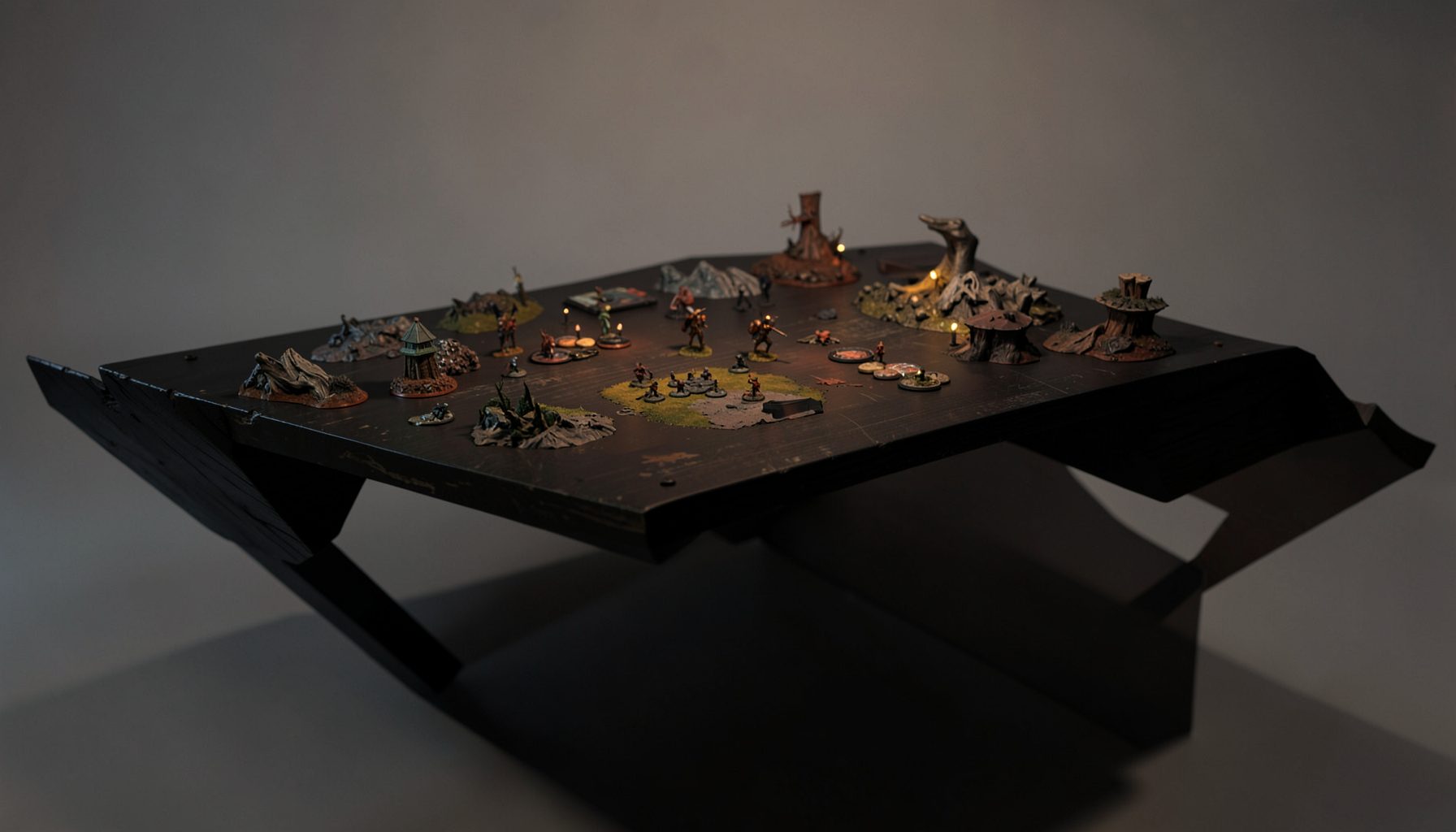
Live-streamed games, recorded matches, and event data gathered in one place.
Kill Team Stream hosts quality live streaming of Kill Team content — tournaments throughout the year on Twitch, regular games streamed to the channel, and tournament data gathered so players can see what's happening in the scene. Powered by WARHAMMER.
Browse tournamentsOfferings
Tournaments
Multiple Kill Team tournaments hosted throughout the year, all live-streamed on our Twitch channel.
Videos
Streams are recorded and uploaded to YouTube alongside original video content we produce.
Event Data
Tournament packets from past events plus resources for upcoming Kill Team tournaments.
Site Directory
Warpcoven in Kill Team: strengths and weaknesses for competitive play
Warpcoven is a Thousand Sons-themed kill team built around a small squad of elite psykers and undead Rubric Marines, supported by a handful of Tzaangor chaff. Across the Australian competitive scene, from Brisbane to Perth, the faction has carved out a reputation as a high-skill army capable of crushing unprepared opponents while folding under pressure from fast melee lists. Understanding where Warpcoven wins and loses is essential for anyone considering the team for a Games Workshop store event, a local Independent Stockist-run RTT, or the next major tournament on the circuit.
The faction operates on a fundamentally different axis than most kill teams in the current edition. Where many competitive rosters rely on board presence and trading pieces efficiently, Warpcoven leans into psychic power dice generation, mortal wound output, and the stubborn 2+ save of its Rubric Marines. This identity gives the team a clear ceiling and a clear floor, and recognising both is what separates a strong run from a disappointing drop at a local store championship in Melbourne or Sydney.
Players weighing the faction should also consider the practical realities of playing in Australia. International tournament streams are usually scheduled for European or North American evenings, which translates to 2am or later starts for viewers in Sydney. Local RTTs organised by groups like Frontline Gaming AU, Aushammer, or store chains such as Good Games fill that gap, and Warpcoven players in Hobart, Adelaide, or regional centres often have to make the most of limited practice partners and shipping delays for new releases.
Roster composition and role coverage
Warpcoven players must build their team around a fixed core: one Aspiring Sorcerer, a mandatory number of Rubric Marines, and a flexible slot for Tzaangors or additional specialists. The Aspiring Sorcerer acts as both the leader and the primary psychic threat, while the Rubric Marines provide the durable backbone that holds objectives and trades poorly with most shooting teams. This rigid structure limits list tailoring, and Australian players who rely on a single local meta at their regular store often find their rosters feel predictable against repeat opponents.
The Tzaangor inclusion is where most competitive lists make their key decisions. A block of four Tzaangors offers forward pressure, objective play, and a way to absorb attacks meant for the Sorcerers, but each model costs relatively little in points compared to the elite Marines. Skipping Tzaangors entirely in favour of more psykers is viable, yet it leaves the team weak on point capture during the early turns, which matters in close games decided by single-victory-point margins at suburban venues around Brisbane or the Gold Coast.
Role coverage within the team is narrower than it appears. Warpcoven lacks dedicated melee monsters or stealth operatives, so every engagement is either a psychic volley or a shootout at long range. This forces players to commit to a specific game plan before deployment, and anyone caught off-guard by a melee rush from a Komandos or Mandrakes list will find the team stretched thin.
Psychic dominance and mortal wound output
The defining strength of Warpcoven is its psychic phase. Between the Aspiring Sorcerer, the optional sorcerer upgrades, and spells like Warpfire or Tzeentch's Firestorm, the team can push out punishing mortal wounds that ignore saves and armour. A well-rolled psychic phase can delete a key operative in a single turn, which is devastating against squishy factions like the Hierotek Circle or Pathfinders.
Power dice generation is the engine that drives this output. Warpcoven generates dice through specific ploys and psychic actions, and experienced players in the Australian scene have refined routines to maximise their generation across the early turns. The ceiling of the team is genuinely high when the dice cooperate, and that potential for explosive turns is why the faction remains attractive to players who enjoy list optimisation and dice management.
The downside is variance. A psychic phase that fails to generate enough dice or suffers a Perils of the Warp result can stall the entire game plan, and Warpcoven has limited fallback damage outside of bolter fire. Australian players who travel to majors interstate often report that the team feels swingy on day two of an event, particularly when fatigue and time zone shifts begin to affect concentration during long rounds.
Durability of Rubric Marines
Rubric Marines are the anvil of the Warpcoven roster. With a 2+ save, three wounds each, and access to a sorcerer buff that grants ignore cover, they are among the most stubborn models in the game on a per-point basis. Against heavy shooting teams like the Kasrkin or Tempestus Scions, Rubrics can absorb fire that would eliminate two or three models from a regular veteran team.
This durability comes with positioning costs. Rubric Marines move 5 inches and lack the infiltrator or grapnel keyword that faster teams use to secure early control. Australian tournaments that feature dense terrain layouts, common in well-run stores in Fitzroy or Newtown, help mitigate this, but open boards with long sightlines punish the team heavily. Skilled opponents will use terrain denial to force Rubrics into mid-board chokepoints where their slow movement becomes a liability.
The 3-wound profile also means Rubrics survive one solid hit that would drop a regular marine, but they still fall to focused anti-elite fire. AP-2 or better weapons, melee attacks with high damage, and mortal wounds from psychic attacks can all crack the armour. Warpcoven players in the local scene often double up on cover saves and use the All is Dust defensive ploy at critical moments to keep their Marines alive through the mid-game.
Movement limitations and board control
Movement is the faction's clearest weakness in competitive play. Warpcoven operates at 5 inches for Rubrics and 6 for Sorcerers, with no innate mobility enhancements beyond a single free dash on the sorcerer. This sluggish pace makes turn-one dominance difficult against teams that can cross the board in a single activation, and players looking to control the early game need to plan their openings carefully.
Australian players who rely on long-distance travel for events, whether driving between regional centres or flying in for major tournaments, often have fewer chances to practice on diverse terrain layouts. Learning to handle open boards through smart use of the scouting phase becomes essential, and resources that break down opening activations are valuable. A detailed breakdown of scouting phase tactics can help bridge the gap for players who cannot attend weekly practice sessions at their local store.
Objective play through the mid-game is where the team often wins or loses matches. Warpcoven cannot afford to trade models freely, so operatives must be moved with a long-term plan in mind, preserving rerolls and psychic dice for the turns that matter. This careful style rewards patient players and frustrates those who prefer aggressive, momentum-based play.
Point cost efficiency and match-up spread
Warpcoven sits at the higher end of the kill team point spectrum, with most competitive builds ranging between 125 and 145 points depending on sorcerer upgrades and Tzaangor counts. This puts pressure on activation count, because the team typically fields only 7 to 9 models compared to the 12 or 13 of a veteran team. Fewer activations mean fewer chances to score Tac Ops or respond to enemy plays, and Australian players in tight ITC-style events often find themselves on the wrong side of an activation differential.
Match-up spread is moderate but not wide. Warpcoven performs well into slow shooting teams, horde factions, and other elite forces that cannot pressure its Rubrics. It struggles against fast melee armies, deep-striking infiltrators, and factions that can ignore its psychic phase through specific ploys. The current Australian meta, shaped by local player preferences and the availability of certain kill teams at retail, leans toward melee-heavy rosters, which has hurt Warpcoven's standing at major events over the past year.
Players in regional centres like Canberra, Darwin, or regional Queensland often see a different local meta than those in capital cities. This makes list preparation trickier, because a build optimised for Melbourne's heavy-melee scene might underperform at a Perth RTT where shooting teams dominate. Flexible rosters that can swap a Tzaangor for a second sorcerer or adjust equipment loadouts give players the best chance of adapting between events.
Common tournament pitfalls in the current meta
Several recurring mistakes sink Warpcoven players at competitive events. The first is overcommitting to the psychic phase early, burning power dice on a single big turn instead of spreading mortal wounds across multiple activations. The second is leaving Rubric Marines exposed on central objectives without supporting fire lanes. The third is failing to score secondary objectives because the team's slow pace limits the number of actions it can complete.
Australian players also face a logistical pitfall that their international counterparts do not. New Kill Team releases often arrive in local stores weeks after their international launch because of shipping from the UK and customs handling. This delay can leave Warpcoven players using outdated rules or missing key balance changes for the first event of a new edition, and it forces local TOs to decide whether to use the most recent FAQ or the printed rules from the box.
Terrain availability is another practical concern. Well-stocked stores in Sydney's Inner West or Melbourne's northern suburbs usually have plenty of Kill Zone sets and custom terrain, but regional events often rely on a single table with mismatched pieces. Warpcoven performs best on dense, balanced terrain, and players should bring their own terrain or coordinate with their TO in advance to ensure the boards at smaller events are competitive.
Adapting Warpcoven for Australian tournament schedules
The Australian tournament calendar is busy but geographically spread. National events like the Aushammer GT and regional majors draw players from across the country, while local RTTs run weekly at stores such as Milsims, Good Games, and various independent hobby shops. For Warpcoven players, the key is matching list choices to the expected meta at each event and arriving with a practiced opening plan.
Practice partners can be harder to find in regional areas, and online play through platforms like TTS has become essential for skill development. Australian players regularly connect with opponents in New Zealand, Singapore, and Southeast Asia to fill out practice schedules, and Warpcoven's small model count makes it a relatively quick army to transport for interstate travel. Airlines generally accommodate a single carry-on Kill Team case without issue, and the faction's low model count is a hidden advantage for anyone driving from Adelaide to a one-day RTT in a neighbouring state.
Mental preparation matters as well. Long event days, early start times for international streams, and the social intensity of Australian gaming culture all play a role in tournament outcomes. Warpcoven rewards clear thinking and disciplined dice management, and players who arrive rested, hydrated, and familiar with the current FAQ will consistently outperform those who wing it. With the right preparation, the faction remains a genuinely competitive choice for any Australian player willing to invest the time.
Warpcoven in competitive Kill Team: quick comparison
| Category | Strength | Weakness |
|---|---|---|
| Damage output | High mortal wound ceiling through psychic phase | High variance on power dice rolls |
| Durability | Rubric Marines with 2+ saves and 3 wounds | Vulnerable to AP-heavy and fast melee lists |
| Mobility | Sorcerer has free dash once per game | 5-inch Rubric movement limits board control |
| Activation count | Efficient elite trades | Only 7-9 models vs 12-13 for veteran teams |
| Objective play | Tzaangors provide objective presence | Limited actions per round for elite builds |
| Local availability | Existing kits widely stocked in Australian stores | New releases delayed by shipping and customs |
Tournament Packets
Packets from previous Kill Team events are kept here alongside new packets for upcoming tournaments, so organizers and players have what they need in one place.
View Event Data