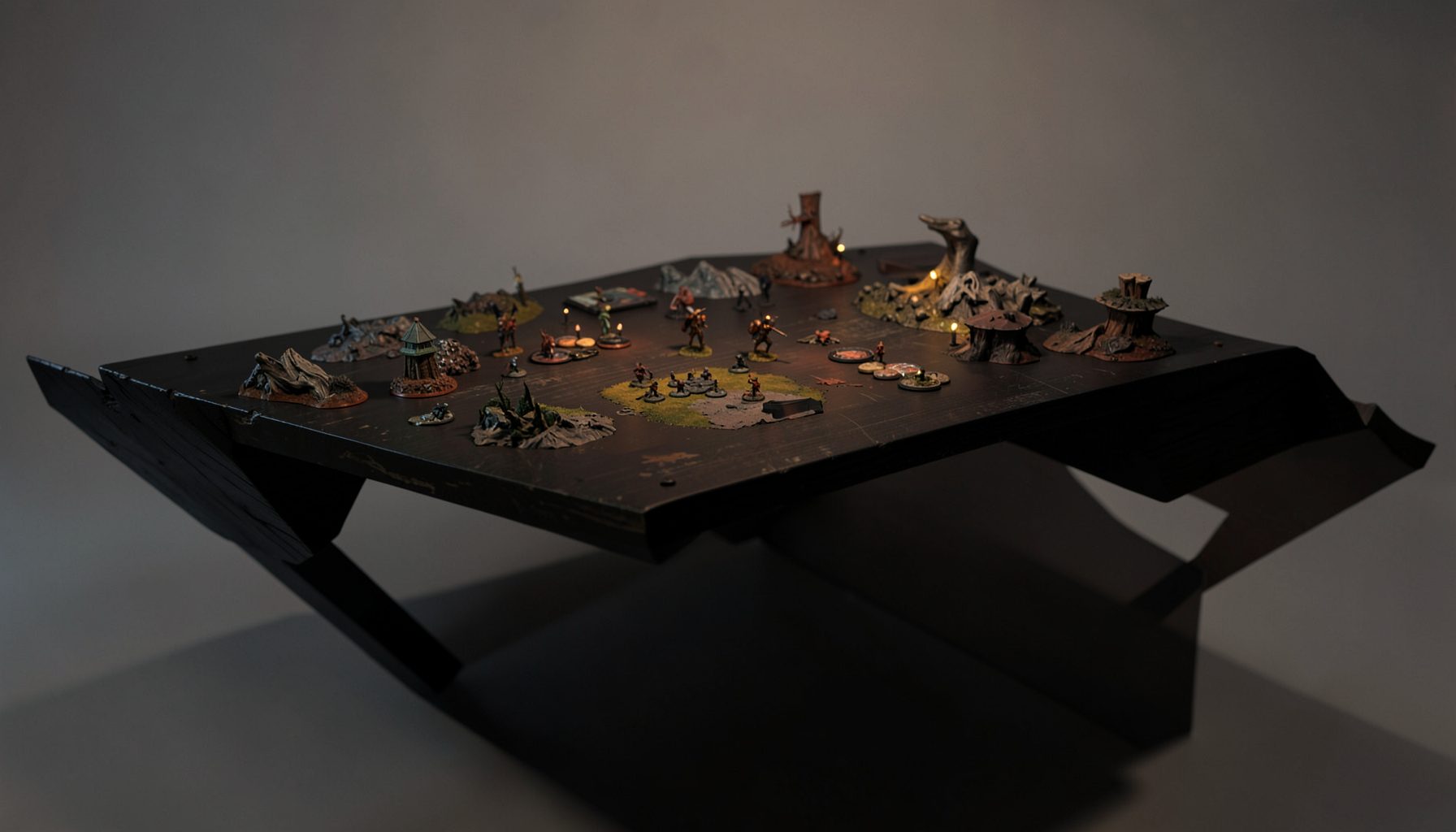
Live-streamed games, recorded matches, and event data gathered in one place.
Kill Team Stream hosts quality live streaming of Kill Team content — tournaments throughout the year on Twitch, regular games streamed to the channel, and tournament data gathered so players can see what's happening in the scene. Powered by WARHAMMER.
Browse tournamentsOfferings
Tournaments
Multiple Kill Team tournaments hosted throughout the year, all live-streamed on our Twitch channel.
Videos
Streams are recorded and uploaded to YouTube alongside original video content we produce.
Event Data
Tournament packets from past events plus resources for upcoming Kill Team tournaments.
Site Directory
Novitiate Faith Points Decide Tight Kill Team Games
A single Faith Point can turn a crushing defeat into a narrow victory, and any player who has piloted the Novitiate knows that feeling of dread when the dial ticks to zero on a critical round. The mechanic sits at the heart of the faction's identity, rewarding patient positioning and punishing reckless trades. In a tournament setting, where every activation is contested and every objective flip matters, those points often decide the final margin.
Faith Points accumulate through specific actions and a small set of datacard abilities, then get spent on miracles that bend the normal flow of dice. Unlike a static army rule, the resource feels alive throughout a match, rising and falling with each player choice. Veteran players treat the pool as a second objective in itself, monitoring it with the same care they give to primary scoring.
Watching competitive games reveals how dramatically those points swing momentum. A Novitiate player who has banked three Faith Points heading into the final turning point can suddenly auto-pass two saves in a row, or force a re-roll on a key wound roll, reshaping an opponent's plan within a single phase. The mechanic rewards players who plan two activations ahead rather than reacting turn by turn.
For newcomers trying to understand why the Novitiate feels so volatile on the table, the live broadcasts hosted through Australian tournament coverage offer a good starting point. Match commentators regularly walk viewers through the resource economy, showing when a holding pattern pays off and when spending early costs the match.
The Faith Pool and How It Builds Through Play
Faith Points enter the pool when the Novitiate player completes certain in-mission actions, most of which tie into the faction's theme of religious zeal. Performing acts of devotion during specific phases, certain operatives securing objectives, and a handful of wargear options all feed the counter. The pool has a soft cap that resets to a defined value at the start of every turning point, so hoarding without spending rarely pays off across a full game.
Because the resource returns to a baseline each round, players quickly learn to treat Faith as a per-turn currency rather than a long-term bank. Holding three points into the next turning point is appealing, but unspent points vanish unless used before the phase transition. This rhythm creates a constant tension between spending for immediate relief and saving for a critical moment later in the game.
The mechanic also rewards list-building choices that quietly feed the pool without obvious drawbacks. A Novitiate player running a Hospitaller or a relic-bearer can rely on small, repeatable contributions that add up across a five-turn game. Experienced opponents learn to identify these operatives quickly and prioritise them as targets, but that pressure plays back into the Novitiate's hands by freeing up Faith Points elsewhere on the table.
Spending Faith at the Right Moment
The most common use of Faith Points is the command re-roll analogue built into the faction's rules. A Novitiate player can burn a point to re-roll a single dice of their choice, applying the effect to a hit, wound, save, or even a critical injury roll. Because the re-roll is player-chosen rather than tied to a specific phase, the flexibility catches unprepared opponents off guard. A seemingly safe save suddenly becomes a gamble, and a missed hit becomes a clean strike.
Beyond the re-roll, several Novitiate abilities interact with the pool in more dramatic ways. Some Acts of Faith allow auto-passing of failed saves or auto-hitting attacks, converting a point into an outcome that no opponent can mitigate. These abilities typically cost more than one point, which is why managing the economy matters. A player who has burned points on a re-roll early may not have enough later for a clutch save.
In Australian competitive play, this kind of resource management often surfaces at events like the Brisbane Open or the smaller weekend RITs at Milspec in Sydney. Players travelling from Perth or Adelaide frequently arrive with lists tuned for late-game miracles, knowing that local metas tend to reward the factions that can punch through a hardened alpha strike. The Faith Points become the difference between a 6-5 loss and a 7-6 win on match-day tiebreakers.
Novitiate Roster Synergies That Maximise Faith Value
Building around Faith Points starts with selecting the right mix of operatives. Characters with abilities that refund points on specific triggers, such as healing wounded allies or completing sacred actions near objectives, form the backbone of any competitive Novitiate roster. Each synergises with the others, creating a chain of small advantages that compound over the course of a match.
The faction also offers unique wargear that interacts with the pool. Relics and devotional items can boost the cap, refund points on death, or convert spent points into additional effects. Picking one or two such items rather than spreading points across too many sources tends to give a more consistent ceiling. Players who chase every available Faith synergy often find their list underperforming in melee, since many of the tools compete for the same elite slots.
Equally important is the choice of fire teams. Novitiate players typically run a balanced mix of combat specialists and supporting zealots, with the supporting operatives staying back to generate Faith through safer actions while the specialists push forward. This split mirrors a common approach seen in Australian doubles events at places like the Canberra Citadel or the Newcastle Tabletop Day, where one player holds the rear and the other pressures the mid-board.
Pivotal Match Moments Caught on Camera
Some of the most memorable moments in recent Kill Team broadcasts have come from Novitiate players burning their final Faith Points in desperate situations. A clutch auto-passed save on a character holding an objective, followed by a miracle hit that removes an enemy operative, has decided more than one streamed match in the last season. Commentators love to highlight these swings because they compress an entire strategic decision into a single dramatic beat.
The rhythm of these moments also illustrates how variable the faction can feel. A Novitiate player who never builds up Faith plays a very different game from one who holds the pool for a late push. Viewers watching on Twitch or YouTube get to see both styles play out across a weekend, often within the same elimination bracket. Studying those matches is one of the fastest ways to internalise when to spend and when to hold.
Australian viewers benefit from the AEST-friendly schedule that many event broadcasts now follow. Local organisers in Melbourne and Hobart have pushed for streaming slots that do not require a 4 AM alarm, and the result is a growing library of recorded Novitiate games available to rewatch at any hour. The full archive lives on its own portal, which collects match footage, deck lists, and photographer photos from weekends across the country.
Countering the Novitiate Without Burning Resources
Opponents facing the Novitiate often over-commit to killing the Faith-generating operatives, only to leave themselves exposed on the actual objectives. A more measured approach targets the miracles themselves by denying the activation order the Novitiate wants. Forcing the Faith-heavy operatives to move out of position before they can spend points disrupts the timing chain without costing an entire fire team.
Another counter is mission play. Many Kill Team missions reward actions that the Novitiate cannot easily accomplish while also building Faith, such as holding territory in specific zones or completing secondary objectives that require off-faction operatives. Choosing a faction with strong mission action efficiency, rather than raw combat power, tends to blunt the Novitiate's late-game swings. Players in the Sydney and Brisbane metas have shifted toward this style over the past year, partly in response to Novitiate dominance at local Opens.
Reading the opposing player's Faith pool is also crucial. The counter is visible on the datacard, and a quick glance during the opponent's activation can reveal whether a miracle is imminent. Experienced players learn to bait out the re-roll early, then push for an objective when the pool is empty. This kind of mind game is often the difference at smaller Australian events where tiebreakers are decided on a single primary point.
Reading the Meta and Building Your Own Faith Engine
Studying recent Novitiate performances is the best way to refine a list. Watching matches from the past few seasons shows how top players spend their points, which operatives they prioritise, and where the resource tends to run dry. Local metas around Hobart, Adelaide, and the Gold Coast have produced slightly different takes on the faction, and comparing those builds reveals which synergies hold up across regions.
Practice matters as much as study. Running a Novitiate force through a handful of casual games against varied opponents builds the muscle memory needed to know when a point is worth spending. New players often burn Faith on the first useful re-roll, then struggle in the final two turning points. A simple habit of asking whether the current decision will matter in turn four changes the way the early game flows.
The faction rewards players willing to plan ahead, and the Australian community offers plenty of opportunities to put that planning into action. Stores in Melbourne's inner north, Brisbane's southside, and Perth's northern suburbs run regular Kill Team nights, and major events like the GOONHAMMER ANZ team tournament draw competitive lists from across the country. Bringing a tuned Novitiate force to one of those events is a strong way to test the Faith Point engine against the best local pilots, and to see just how often those small miracles reshape the final scoreboard.
Tournament Packets
Packets from previous Kill Team events are kept here alongside new packets for upcoming tournaments, so organizers and players have what they need in one place.
View Event Data